Hunting the Hunter: How to Choose the Right Streamer
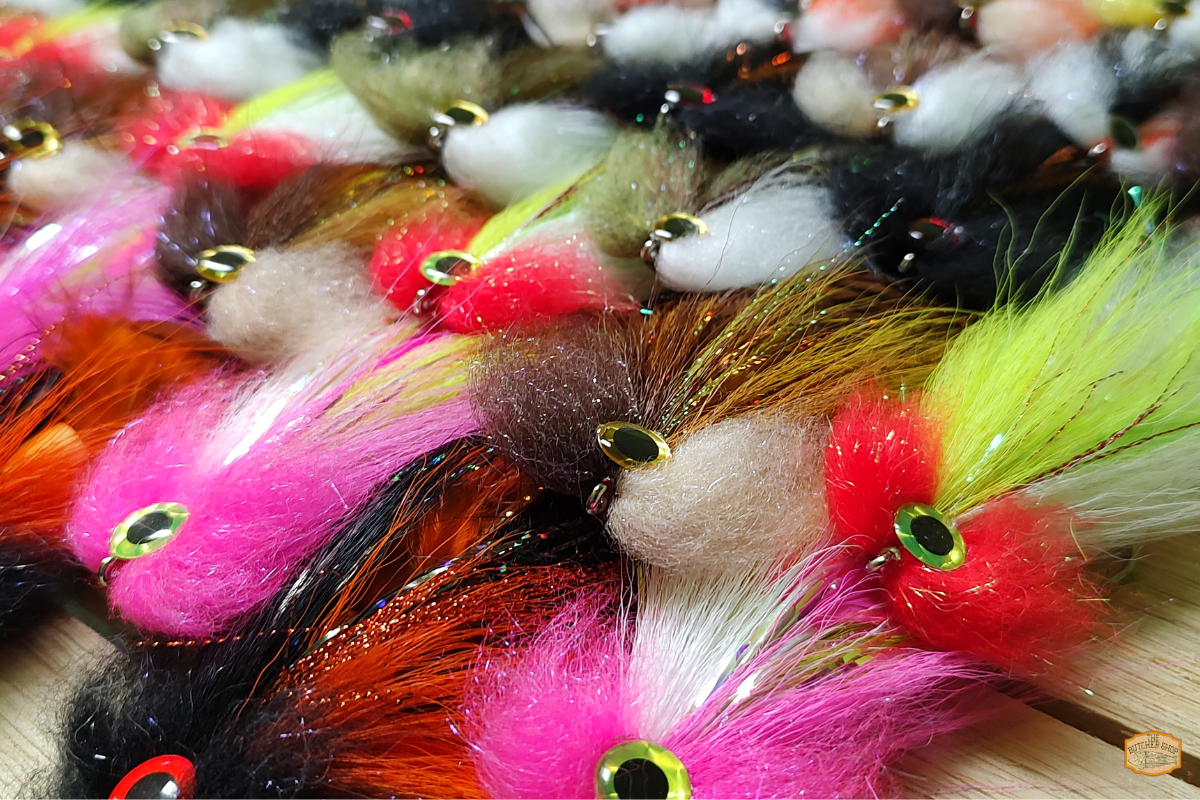
I have been fortunate to interview and fish with some of the most respected streamer anglers in the game today. All of them have a systematic process for attacking the water - something everyday anglers rarely develop. Successful streamer anglers select the right streamer by matching profile, visibility, action, depth and hook placement to the conditions on the water. For example, in clear water, smaller and more natural flies usually outperform larger, louder patterns. In dirty water, larger profiles, brighter colors and more presence help fish find the fly. Across fisheries, the most important variables are water clarity, forage size, fish aggression and posture, depth and how the predator attacks its prey. Most anglers start with patterns. The best streamer anglers start with variables.
The Short Answer
Choosing the right streamer comes down to five questions:
- What can the fish see?
- What forage is available?
- How aggressive are the fish likely to be?
- Where in the water column do they want to eat?
- Do they inhale prey (e.g., largemouth bass) or strike it laterally (e.g., musky)?
These five variables determine optimal streamer selection far more consistently than haphazardly rotating through patterns. If you understand how these five variables interact, successful streamer selection becomes much simpler—and much more repeatable.
The Five Variables
1. Water clarity determines fly visibility
Water clarity allows you to quickly bifurcate your fly choice.
In clear, low water, predators have more time to inspect the fly. That usually favors:
- smaller flies
- muted, natural colors
- matte or low-flash materials
- lighter eyes and a softer landing
In dirty or off-color water, fish rely more on silhouette, vibration and contrast than fine detail. That usually favors:
- larger profiles
- brighter colors
- stronger contrast
- more presence in the water (e.g., a rattle)
A useful rule is simple: The dirtier the water, the more visible the streamer needs to be.
Related Episodes
- Tying the Circus Peanut Streamer with Russ Maddin
- Crafting The Nut Job: A Deep Dive with Brendan Ruch
- Home Invader Fly Pattern: Tying & Fishing Tips with Doug McKnight
2. Match forage size and shape before color
Streamer anglers often talk about color first, but size and profile usually matter more.
Predators tune to the available forage in a system. If the dominant prey is small and narrow, a large, bulky fly can be ignored even if the color is correct. If fish are feeding on broad, flat bait, a round-bodied pattern may not look right even if it swims well.
Think about forage in terms of:
- size
- silhouette
- body shape
- seasonal timing
If the river is full of crayfish, a shad-shaped fly may be wrong. If baitfish are migrating or hatching, matching that size and profile can be far more productive than matching a particular color.
A simple decision rule is: match size and silhouette first, then adjust color for visibility.
Related Episodes
- The T-Bone: A Deep Dive with Blane Chocklett - The Butcher Shop
- Tying the Circus Peanut Streamer with Russ Maddin
- Mastering Bob Popovics' Beast Fly with Captain Ben Whalley
3. Fish aggression and posture change the boldness of your presentation
The correct streamer is also a function of a fish's willingness to eat.
When fish are neutral, pressured or cold, they usually respond better to:
- smaller or more refined profiles
- less intrusive materials
- flies that stay in the zone longer
- patterns that can be stalled or paused convincingly
When fish are active and willing to chase, larger or more aggressive patterns can be the better choice, especially if they:
- push more water
- show more movement
- trigger reaction strikes
- deny the fish time to inspect the fly
In other words, fly selection is not just about what prey looks like. It is also about the fish's mood and its need and willingness to eat.
Related Episodes
- The T-Bone: A Deep Dive with Blane Chocklett - The Butcher Shop
- Swingin' D Fly Pattern Guide: Expert Techniques with Mike Schultz
- Shack Nasties and the Drunk & Disorderly: A Winter Chat with Tommy Lynch
4. Depth should be controlled primarily by line, not by over-weighting the fly
One of the most important principles in streamer fishing is that depth is usually a line problem first, not a fly problem first.
Many anglers make the mistake of selecting a heavier fly when they actually need a different line density. Over-weighting a fly often kills action. A better approach is to keep the fly lighter and more animated, then use the line to put it in the correct position in the water column.
That means streamer selection should consider not just the fly itself, but also:
- floating vs. intermediate vs. sinking line
- tip density
- leader length
- current speed and gradient
Correct streamer selection is only the first part of the equation. Consistently fishing it in the zone with a lifelike action is the second.
Related Episodes
- The T-Bone: A Deep Dive with Blane Chocklett - The Butcher Shop
- Shack Nasties and the Drunk & Disorderly: A Winter Chat with Tommy Lynch
- Tying the Circus Peanut Streamer with Russ Maddin
- Fly Line Engineering with Josh Jenkins | Scientific Anglers Podcast
5. Hook placement should match how the fish attacks prey
Not all predator species eat the same way. Some fish inhale prey. Others strike it laterally and stun it.
That matters because hook placement should match the predator's feeding style.
For fish that tend to inhale prey, a single well-placed hook is often enough.
For fish that tend to T-bone or grab prey, hook placement needs to account for where the fish actually makes contact. In those situations, a mid-body hook or additional stinger can dramatically improve hookups.
This is not a minor design detail. It can determine whether the streamer hooks a fish or merely gets a bump.
Related Episodes
- The T-Bone: A Deep Dive with Blane Chocklett - The Butcher Shop
- Mastering Bob Popovics' Beast Fly with Captain Ben Whalley
- Tying the Circus Peanut Streamer with Russ Maddin
How fly design affects selection
Selecting the best streamer for the job is also a matter of design logic.
Head shape controls action
Head shape influences how water is diverted around the fly, and that changes how it swims.
- Larger or denser heads create more drag
- Bulbous heads exaggerate side-to-side movement
- Narrower heads create a tighter swim
- Head size should remain proportional to overall fly size
If the fly is too small for the head, the profile and movement can become unnatural.
Materials control glide and pulse
Material choice affects how water moves through and around the fly.
- Smooth, flat materials tend to glide more easily
- Kinked or textured materials add resistance and slow the fly down
- Rigid structures support a true glide
- Compressible materials add pulse but reduce lateral momentum
This means streamer selection is partly about asking: how do I want this fly to behave in the water? Remember the answer is simple - make it look like food.
Some flies are better for covering water, others for suspension
Rubber legs, draggy materials and parachute-style construction can help a fly suspend and stall. That is useful when staying in the strike zone matters more than covering water.
Cleaner, less resistant flies are usually better when you want the fly to move faster or swim more efficiently.
Related Episodes
- The T-Bone: A Deep Dive with Blane Chocklett - The Butcher Shop
- Swingin' D Fly Pattern Guide: Expert Techniques with Mike Schultz
- Crafting The Nut Job: A Deep Dive with Brendan Ruch
A practical streamer selection framework
When choosing a streamer, work through these questions in order:
1. What is the water clarity?
- Clear: natural, smaller, softer landing
- Stained: brighter, larger, more contrast
2. What forage is present?
- Match size and silhouette first
- Adjust color second
3. How aggressive are the fish?
- Neutral: subtler fly, longer hang time
- Aggressive: larger profile, more movement, more pronounced bite triggers
4. Where are fish feeding in the water column?
- Change line first
- Weight the fly only as much as needed
5. How does your target species attack its prey?
- Inhaling: standard hook placement may be enough
- Lateral attacks: consider mid-body or stinger placement
That sequence gives you a far better starting point than choosing a pattern that worked the last time you were out.
Common streamer selection mistakes
Choosing color before profile
Color matters, but profile and size usually matter more.
Over-weighting the fly
Too much weight often kills the fly's action and creates a suboptimal solution to a depth problem.
Fishing the same fly repeatedly in pressured water
Educated fish often require real variation in size, material or profile, not just a small color change.
Ignoring attack mechanics
You can consistently miss hookups if a fly is designed without considering how the fish actually attacks its prey.
Treating pattern names as universal answers
The same named pattern may be right in one visibility window, forage situation or water column and wrong in another.
The bottom line
The optimal streamer is selected by matching the fly to conditions, forage, fish behavior, depth and strike behavior. Water clarity controls visibility. Forage controls size and silhouette. Fish aggression and posture controls how bold your presentation should be. Line choice controls depth. Hook placement should reflect how the targeted species attacks its prey.
The best streamer anglers do not just ask, "What fly should I throw?" They ask, "What problem am I trying to solve?"

Host & Producer
Marvin founded The Articulate Fly in 2018 to support the fly fishing community with fly fishing podcasts, blogs and fishing reports for both novice and expert fly fishermen.
While our guests include national personalities such as Blane Chocklett, Landon Mayer and George Daniel, we also focus on regional personalities of interest to Mid-Atlantic, Midwestern, Mountain West and Southeastern anglers.
In addition to the podcast, we provide consulting services to manufacturers, retailers, guides and influencers, helping them have a more profitable and fulfilling career in the fly fishing industry. While our core offerings are strategic planning, process improvement and good old fashioned blocking and tackling, we have developed a growing expertise in automation and AI implementation. Marvin is a regular speaker and workshop leader on the latest trends and opportunities in artificial intelligence and automation.
Off the water, Marvin has spent the last thirty years as a lawyer, entrepreneur and businessman and has become a trusted advisor to his friends and colleagues. He has served in senior leadership positions on several non-profit boards.
If we can help you on your fly fishing journey, don’t hesitate to drop us a line.
HONORS & AWARDS:
Outdoor Writers Association of America, Excellence in Craft Second Place (2023), Radio/Podcast Fishing
Imperfect Texan Buddha Steve Ramirez (Pt I)
Outdoor Writers Association of America, Excellence in Craft Second Place (2024), Radio/Podcast Fishing
Family and Fly Fishing w… Read More

Smallmouth Bass on the Fly


