S8, Ep 32: Spring Fishing Unlocked: Mac Brown's Tips for Targeting Elementary and Graduate School Fish

 Apple Podcasts
 Spotify
 Overcast
 Castro
 YouTube
 RSS Feed
 Episode Overview
In this Casting Angles episode of The Articulate Fly fly fishing podcast, host Marvin Cash reconnects with Master Casting Instructor and veteran Western North Carolina guide Mac Brown of Mac Brown Fly Fish in Bryson City for a timely mid-May conditions update on the Tuckasegee River. With the delayed harvest season winding down and roughly three weeks left to fish the DH water, Mac and Marvin break down exactly what anglers are up against — and how to read it correctly. The Tuck is running well below its seasonal average at roughly 400–500 cfs compared to a normal 1,600–1,800 cfs, but recent rainfall and cooler temperatures are providing a welcome reprieve from what has been a difficult spring across the mid-Atlantic and southern Appalachians. The episode centers on one of the most practical and underappreciated skills in trout fishing: learning to distinguish between freshly stocked fish and the educated holdover and lake-run trout that share the same water — and adjusting technique and fly selection accordingly. Mac walks through his system for identifying fish by their behavior and location, his nymphing rig progressions through the day, and why moving away from indicators is no longer optional in low, clear water.
Key Takeaways
- How to identify stocked versus holdover and lake-run trout on the Tuckasegee by using stocking truck access points and "junk food" fly response as a quick field diagnostic.
- Why fishing a natural-colored anchor pattern like a Walt's Worm in the morning and transitioning to smaller flies as the day progresses is Mac's preferred nymphing progression in low, clear water.
- How to position a small nymph pattern on the dropper or point depending on whether fish appear to be feeding higher in the column or holding deep.
- Why using a large sacrificial dry fly — a Parachute Adams, Stimulator or Elk Hair Caddis — as a sight indicator for a trailing small dry creates a "training wheels" system for less experienced dry fly anglers targeting educated fish on size 18–20 patterns and smaller.
- How marking your fly line or leader with small foam indicators or competition nymphing wax lets you track takes by watching for changes in the alignment of the indicators or wax marks.
- Why fishing indicator-free with a longer leader at low water is increasingly critical as DH fish become conditioned to suspension devices.
Techniques & Gear Covered
The episode focuses primarily on indicator-free and low-profile presentation techniques for technical low-water trout fishing. Mac's core nymphing approach involves a natural-colored anchor fly paired with a very small midge or emerger, with dropper or point placement adjusted based on where fish appear to be in the water column. For dry fly fishing, both Mac and Marvin advocate a sacrificial large attractor — Parachute Adams, Elk Hair Caddis, Stimulator — with a size 18–20 smaller pattern that fish are actually eating trailed 12–14 inches behind; they call the large fly "the sacrificial fly" for a reason: it never gets eaten, it just helps anglers locate their small fly. As an alternative to a sacrificial dry, Marvin recommends marking the fly line or leader with foam stick-ons or nymphing wax and watching for the indicator marking to straighten on the take. Mac confirms that big bobber rigs and streamers are the wrong tools when PhD fish are locked into size 20–24 midges and blue-winged olive emergers.
FAQ / Key Questions Answered
How do I tell whether I'm fishing to freshly stocked trout or educated holdover fish on the Tuckasegee?
Mac's field diagnostic starts with geography: on the Tuck, stocking trucks can only access about five specific pullouts on the narrow gravel road, so fish podded up near those locations are almost certainly recent stockers. Fish holding far from those access points in less obvious water are likely holdovers or lake-run trout. A second confirmation: throw a "junk food" fly — a bright attractor or gaudy nymph — through a riffle. If you're getting easy eats, those are the new fish. PhD fish feeding on size 20–24 midges will ignore streamers and big rigs entirely.
When should I use an indicator versus fishing indicator-free on low, clear water?
Mac's view is unambiguous: in low, clear conditions — especially late in the DH season when fish have been seeing indicators for weeks — suspension devices hurt your results more than they help. He prefers a longer leader setup, tracking the nail knot or line end visually, and fishing emerger patterns just an inch or two under the film. The mechanics of detecting a subtle take watching the line end are no different from detecting takes when tight-line nymphing subsurface. Marvin adds that marking the leader with foam indicators or competition wax gives less experienced anglers a visual reference without the wake and shadow of a traditional indicator.
What is the "sacrificial fly" system for small dry fly fishing?
The idea is to rig a large, highly visible attractor — a Parachute Adams, Elk Hair Caddis or Stimulator — with a small dry fly (size 18–20 or smaller) trailed 12–14 inches behind it. The big fly never gets eaten by selective fish; it simply anchors your eye to where the small fly roughly is. When a fish rises anywhere near the attractor's position, lift — hook sets are free. Mac notes that after hundreds of drifts through the same run, not one fish ate the big fly, but many took the small trailer. It functions as training wheels for anglers who aren't yet comfortable tracking a size 20 dry without a reference point.
How do I adjust fly placement between dropper and point position when nymphing small nymphs?
Mac adjusts this through the day based on where he believes fish are holding and feeding. Early in the morning when fish are likely still deeper, he puts the small fly on the point so it sinks further. As conditions warm and light increases — and as fish move toward emerging insect activity — he moves the small fly up to the dropper position, higher in the water column to intercept fish feeding near the surface. This single rig adjustment tracks fish behavior as the day progresses without changing the entire setup.
What are current Tuckasegee River conditions and how long does the delayed harvest season last?
Recorded approximately 10–11 days into May, this episode describes the Tuck running at roughly 400–500 cfs — significantly below its seasonal average of 1,600–1,800 cfs. Recent rainfall and cooler overnight temperatures (upper 30s) are providing relief. DH fish remain in the water until the first Saturday of June, giving anglers roughly three weeks from the recording date to target them. A fresh stocking round has been completed, so both new fish and conditioned holdovers are present simultaneously.
Related Content
S8, Ep 25: The Science of Stealth: Mac Brown on Fishing Techniques for Low Flow Scenarios
S7, Ep 88: Low Water, Big Adjustments: Mac Brown's Essential Tips for Fall Fishing Success
S7, Ep 41: Navigating High Water: Strategies for Success with Mac Brown
S7, Ep 28: Warming Waters and Active Fish: A Spring Fishing Update with Mac Brown
S6, Ep 145: Navigating Winter Waters: Unconventional Strategies with Mac Brown
Connect with Our Guest
Follow Mac on Facebook, Instagram and Twitter.
Follow the Show
Follow The Articulate Fly on Facebook, Instagram, Threads and YouTube.
Follow our Substack newsletter for episode updates, tips and resources.
Support the Show
Shop through our Amazon link to support the podcast.
Join our Patreon community to support the show.
If you are in the industry and need help getting unstuck, learn more about our consulting options.
Subscribe & Advertise
Subscribe to the podcast in your favorite podcast app.
Think our community is a good fit for your brand? Advertise with us.
In this Casting Angles episode of The Articulate Fly fly fishing podcast, host Marvin Cash checks in with Mac Brown of Mac Brown Fly Fish in Bryson City, North Carolina, for a late-spring conditions update on the Tuckasegee River as the delayed harvest season enters its final weeks. With the river running significantly below seasonal norms at around 500 cfs, Mac and Marvin break down how to identify and fish to a mixed bag of freshly stocked fish, holdover residents and educated lake-run trout all sharing the same water. The conversation covers when to abandon the indicator, how to rig and fish the sacrificial fly system for small dry fly presentations, and how attractor nymphs like the Walt's Worm can quickly sort new stockees from PhD fish keying on size 20–24 midges and blue-winged olive emergers. Listeners fishing any low-water delayed harvest program through late spring will find directly applicable advice on presentation refinement, indicator-free nymphing and reading fish behavior under post-frontal conditions.
EPISODE SUMMARY
Guest: Mac Brown — Owner and Guide/Instructor, Mac Brown Fly Fish (Bryson City, NC)
In this episode: Master Casting Instructor Mac Brown shares tactical insights for fishing the tail end of the delayed harvest season on the Tuckasegee River under low-water, post-frontal spring conditions. Topics include reading mixed fisheries with multiple trout populations, indicator-free nymph presentation, sacrificial dry fly rigging and fly selection for selective, educated trout.
Key fishing techniques covered:
- Indicator-free nymphing — tracking nail knot and fly line end through the drift with rod low and following the current
- Sacrificial dry fly system — large attractor (Parachute Adams, Stimulator, Elk Hair Caddis) as a strike indicator trailing a small dry or emerger 12–14 inches behind
- Attractor nymph testing — Walt's Worm in natural colors to identify fish willingness early in the session
- Dropper position adjustment — shifting the small fly between point and dropper based on fish holding depth and stage of day
- Reading stocking access points to distinguish stockees from holdovers and lake-run fish
Location focus: Tuckasegee River (Bryson City, NC); Western North Carolina delayed harvest waters
Target species: Rainbow trout and brown trout (stocked, holdover and lake-run)
Equipment discussed: Walt's Worm (natural colors), Parachute Adams, Elk Hair Caddis, Stimulator, size 20–24 midges, blue-winged olive emergers, NRS Otter rafts, Clacka Craft drift boats, nymphing wax (comp-style), foam line markers
Key questions answered:
- How do you tell stocked trout from holdover or lake-run fish on a DH river in low water?
- When should you drop the indicator and switch to indicator-free nymphing?
- How do you rig and fish the sacrificial dry fly system for small dry fly presentations?
Best for: Intermediate to advanced anglers fishing Southern Appalachian delayed harvest waters, small-fly trout presentations or any low-water tailwater or freestone fishery in late spring.
FULL TRANSCRIPT:
Marvin Cash
Hey, folks, it's Marvin Cash, the host of The Articulate Fly, back with another Casting Angles with the man himself, Mac Brown. Mac, how are you?
Mac Brown
I'm doing great. How are you doing, Marvin?
Marvin Cash
As always, just trying to stay out of trouble. And you know, folks, we talk before we record and sometimes we talk a long time, sometimes we talk a really long time.And you know, one of the things we thought would be interesting tonight, we've been kind of, I wouldn't say negative. I think we've just been honest that the fishing season, regardless of what you've been chasing this spring, has been pretty tough.But, you know, we've got got some good news here in the mid Atlantic and in the southern Appalachian. Do you want to kind of update folks? Mac?
Mac Brown
Sure. The biggest, biggest change, really the last. Since the last podcast, we've had quite a bit of cool weather the last two weeks.We're supposed to get down in the upper 30s tonight again after the little front that moved through this weekend. And on top of that, we've getting a little bit of rainfall. So between cooler temperatures and rainfall, that's a win. Win.So the tuck still hanging in there about 500 cfs, I think right now.So to give folks an example though, of what that means is cubic feet a second in normal flows this time of year, usually about 16 to 1800 cubic feet a second. And we're fishing on 4 to 500 instead of, you know, 16, 1700. So it's quite a bit of difference if you're in a boat throwing people down, you know.
Marvin Cash
Yeah, it definitely means you might want to crack the raft out a little early, right?
Mac Brown
Yeah, yeah. The rafts are where it's at. I mean, you see a lot of drift boats here in Bryson, but I think it's just because they don't have an option for a raft.But we've got a bunch of NRS otters and a bunch of Clacka crafts, and it depends on what the water's doing for which one we take.
Marvin Cash
Yeah, and so the interesting thing is that, you know, you've also gotten a fresh round of stocking in the DH program, and so those fish get to kind of hang out until the first Saturday in June. But, you know, the other thing that's going on is you've got the holdover resident fish and then you've got fish that are running out of the lakes.And so you really kind of have, you know, elementary school fish and graduate school fish on the tuck at the same time.
Mac Brown
Yeah, that's a good Way to describe it, kind of like elementary school, maybe middle school, like. And then you got the PhD fish too, that have been in there long time.The fish that come up out of the lake tend to be really, really in tune with what the river's given up. And they. They know the game pretty well. Like to see somebody in there throwing a big, you know, bobber at 400 cfs, it plops into the water.That's probably not a great idea this time of year. And then you got people that are. I saw this the other day on a trip. You mean four boats that were in front, two and back.They're all throwing big streamers on these fish that are eating size 20 fours. That's your PhD fish. Of course, they never caught one because they're.They're focused in on really small midges and emerges of blue wings that were coming off. So there's a time and a place to do all these techniques.But, yeah, when you got a mixture of fish of what we're experiencing right now, you really gotta make the right call to be successful.
Marvin Cash
Yeah. And so I guess to deal with low water, you know, we would probably say no indicators. Dry dropper. Right.And if you could get away with fishing without an indicator, even better.But, you know, what are your suggestions in terms of, you know, you gotta kind of have a system for figuring out whether you're fishing to an elementary school fish or a graduate school fish. And how does that kind of, you know, dictate your approach and fly selection and all that kind of good stuff?
Mac Brown
Well, down here in Bryson, I guess the easy thing is there's only about five different spots where the truck can actually stop. Because it's a gravel road, it's narrow. So just look for.If you see a spot, you could pull a big old, you know, truck the size of a cement truck over, then chances are that's one of the spots they probably put them in and they stay potted up for a week or two. And so they're still potted up. The new ones they put in, they're still fairly potted up together and haven't spread out.So if you're in a spot that's on the river that's, you know, far in between that, then chances are those are the holdovers we're talking about. So that's probably the easiest way to think about where. Where would they have.You know, I think a lot of people think because they put fish in somewhere that they put them all up and down. That's not the way it Works they. They have four or five spots they use and takes them several weeks to spread out.And once they spread out, then who knows what they are. But you can kind of tell by just hitting, you know, likely water. If you throw in some, you know, what we call junk food in the guide business.If you're throwing junk food and you're doing real well in a riffle, chances are those are the new fish, you know, so that's kind of the way we judge it when we're floating down.
Marvin Cash
Yeah. And so would you.I mean, you know, the dry fly game is maybe a little bit easier to diagnose because you'll either see stuff on the surface of the water, you won't.You'll know that graduate school, elementary school break off pretty quickly because if you don't see anything, those are probably fish running up out of the lake or the resident fish that are pretty dialed in on the small stuff. But, you know, any tips for folks in the sense of, you know, fish like a. A junk.Junk food fly and then maybe have like a really, really small nymph, you know, off of that to maybe see if you can kind of float through and kind of dial things in and fish to kind of both at the same time.
Mac Brown
Yeah, no, that's a good idea. I mean, to use something that's a little bit bigger, like say a Walt's Worm or something natural, you know, for.For nymphing in the morning when it's early. Like, I'll use a lot of those in the morning and like a Walt's Worm with natural colors.Cause it's been bright, you know, after the rainfall we had over the weekend. It's with this cold front in place now. It's, you know, fairly bright conditions.And then off of that, then we'll put some really small pattern either on the point or sometimes depends what we're doing. But a lot of times I'll run it up on the dropper too, the smaller fly. So it kind of depends if I think they're emerging.I'll run it with the small fly up in the middle of the column. And if I think the. If it's really early and you think they're still holding deeper, then I'll put the small fly on the point. So we, we helped. We.We changed that quite a bit through the day.
Marvin Cash
Yeah. And I would say too, folks, you know, don't be intimidated on the dry fly sides when we talk about fishing, like, you know, 18s and smallers.I mean, the trick on that is, you know, sacrifice a larger fly you know, like a large Parachute Adams or stimulator or something like that.And then put the small fly that they're really eating, you know, off the back of that fly and you know, basically you can see the Adams, you can see the Elk Hair Caddis, you can see the Stimulator. And if you see anything rise, you know, roughly with that around where you think that that dropper dry fly is just lift. Right.Cause hook sets are free.
Mac Brown
That's right. Yeah. That's, that's a great way to do it. And you don't have to be like comp legal at 20 inches and all that.So what works really well with a smaller parachute or CDC flies just put it about 12 inches away. 12, 14 Inches is all it needs to be because they're not going to eat the big fly if it's, if it's the educated fish that are feeding on small stuff.Because we had that happen several times last week. We watched it drift through there.Oh, and the run, we were fishing, we stayed in the same run for a couple hours and I mean we got hundreds of drifts through that run and not one fish ate the fly. That was big. We call that the sacrificial fly. So they can find the small one, but we caught a lot of fish on the small one that tied off the end.So that's a good way because a lot of people just, it gives them confidence if they can see roughly where to look. You know, with time I think people get used to not seeing it. But I mean, because you, you kind of know where your fly went if you've done it a lot.But I think people that don't do it a lot, they need to have, it's kind of like saying training wheels for dry fly. You follow me? And I think it's a great, a great tip.But a lot of dry fly purists and stuff up here, I mean a lot of em will just throw three small flies too. I mean it doesn't have to be, it's not like one or the other. It just depends where somebody is.
Marvin Cash
Yeah, and I would say too, you know, if you don't want to go the sacrificial larger fly route, you can always mark your fly line or your leader either with like the little foam, you know, stick ons or use some of the like nymphing wax that the comp guys use. And you just kind of watch the relative position of those markings on the fly line or the leader.And if you see them straighten out, that tells you you got a Fish you need to lift.
Mac Brown
That's right. That's my favorite way to.To this time of year is just using a long, longer setup at this low water and just watching the, you know, even watching the nail knot, you know, turn it over, like for your drifts, and they just sit there and watch the end. Keep the rod low, you know, to the water where you're tracking it and tracking it and following it down.And then just watching the end, if we're fishing emerges like say, under the. Under the film or, you know, I mean, I think people get hung up on feeling like, hey, I gotta see it.But think about all the folks that, you know, nymph fish and spend a lifetime learning how to perfect fishing subsurface. It's not any different fishing something two inches under the surface either.The same kind of setup, you know, So I think that can be beneficial for folks too, is learning to move away from indicators.Because I'm convinced even with fish that are new, it doesn't take fish long to adjust to the fact that if there's something big out there, something abnormal, like even a little pinch on salsa indicator that's orange, you know, I think you get away with it the first week or two, then three weeks in when they get really beat up. I mean, that stuff actually is, I think, hurting the overall results, you know.
Marvin Cash
Yeah, for sure. I mean, gosh, when you see those fish and they've been in for two weeks, I mean, you know, they. They are pretty torn up.But, you know, hopefully folks, one, we get to be a little bit positive, you know, so we're recording this here, I don't know, 10, 11 days into May. So you've got probably, you know, a good three weeks left to kind of chase these DH fish.And, you know, it looks like our weather is not going to super heat up anytime soon. And maybe there's some rain in the forecast, so, you know, get out there and catch a few.And I know, Mac, you've been taking care of stuff around the house, but. And you don't have any classes, I don'. Think until the fall. But you want to kind of let folks know, you know, guide schools, all that sort of stuff.You know, how to get in touch for guide trips and casting classes and stuff like that.
Mac Brown
Sure, sure, that'd be good. The we have some.We have some casting schools coming up, saltwater school, and then we have a. Oh, there's some nymphing weekend schools and some wet fly schools, and there's a dry fly school middle of June, and those will all be be shown up on the macbrownflyfish.com website. That's the easiest way. Or reach out with or call or, you know, social media. I mean, they can do that.But I really don't look at that that much, so probably best to email me.
Marvin Cash
Well, fair enough. Well, listen, folks, you know, we've got. If you're in the DH game, you got two or three weeks to get after it. So you get out.Need to get out there and catch a few tight lines, everybody. Tight lines, Mac.
Mac Brown
Tight lines, Marvin.
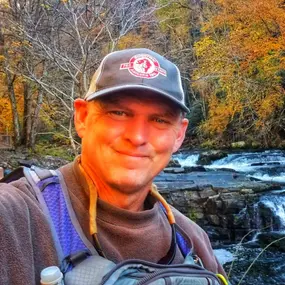
Guide | Casting Instructor | Author
Mac Brown is the owner of Mac Brown Fly Fish and Fly Fishing Guide School in Western NC. Mac created the first full-time fly fishing guide service in Western North Carolina. The first Delayed Harvest on the Upper Nantahala River in early 1993 was also a result of his efforts.
Mac Brown is the author of “Casting Angles” which is a fly casting handbook for those on the journey of understanding the mechanics of the cast. The ACA, FFI, and others have endorsed this text as a reference for instructors as well. Mac is a Master Casting Instructor through the Fly Fishers International.

