S8, Ep 29: Fishing in Flux: Matt Reilly's Take on Spring Trends and Techniques

 Apple Podcasts
 Spotify
 Overcast
 Castro
 YouTube
 RSS Feed
 Episode Overview
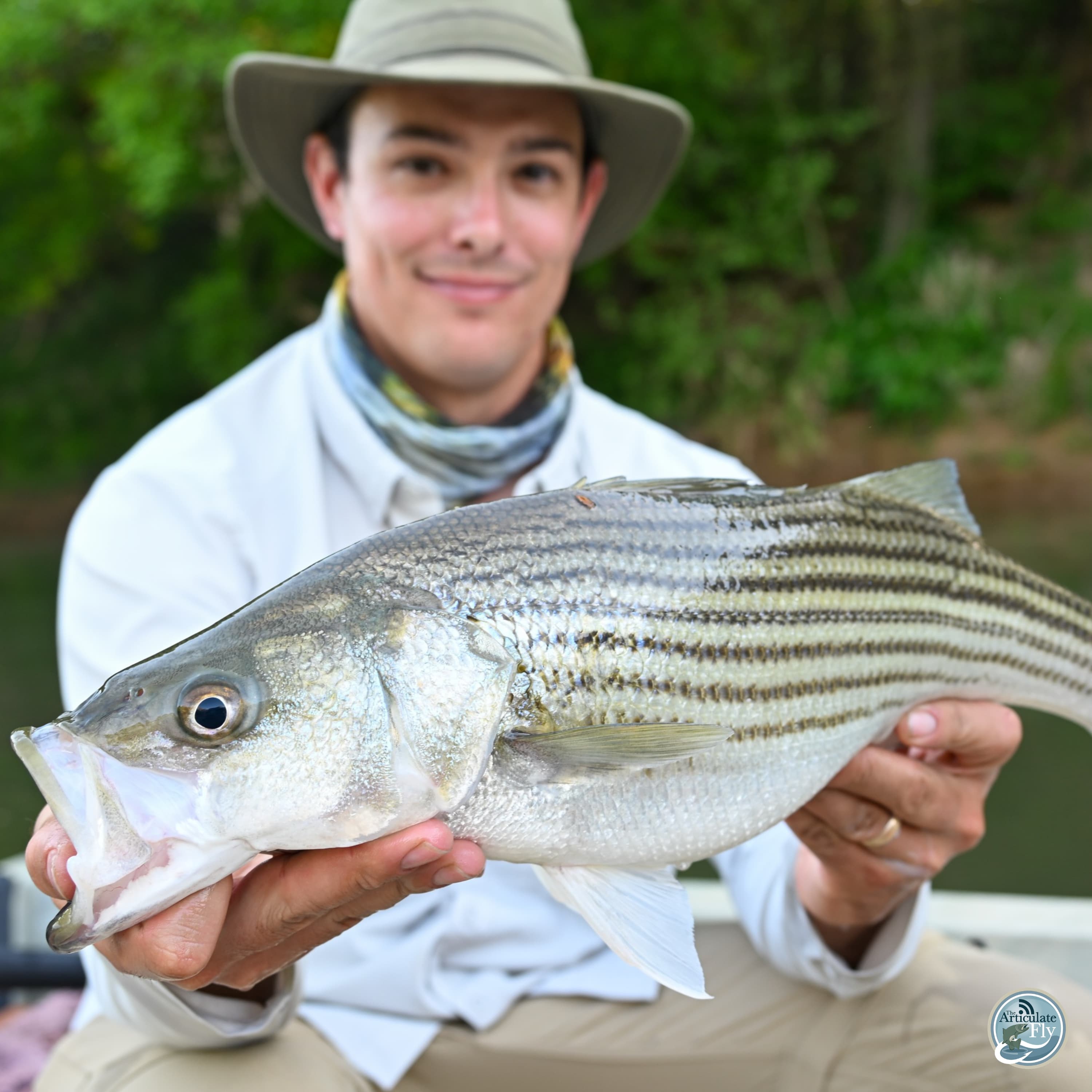
The Articulate Fly returns to Southwest Virginia with guide Matt Reilly of Matt Reilly Fly Fishing for a candid late-spring conditions update covering the 2026 striper run, the smallmouth spawn transition and the tactical realities of fishing during one of the most compressed and drought-affected springs on record. Marvin Cash and Matt dissect a season that accelerated and stalled simultaneously — an extended cold February followed by an abrupt heat spike of 85–95°F days in late March and early April, paired with persistently low water, collapsed the striper run and complicated every major seasonal transition on Southwest Virginia's river systems. The weird weather and flows have made it genuinely difficult to pattern pre- and post-spawn smallmouth — the fish anglers actually want to target — because the usual seasonal cues have been compressed and scrambled. Matt provides a practical framework for identifying spawning males so you can skip them and keep hunting for fish that are actively feeding: the lazy follow, the lip-grab without commitment, the fish that trails your bug 8–10 feet off the bank and turns back are all signs to move on. He also explains why low water in an otherwise frustrating spring carries a meaningful upside for long-term recruitment if dry conditions hold through June. The episode closes with a thoughtful response to a listener question from Myles about breaking into fly fishing guiding professionally, with Matt covering mentorship, income diversification, the ethics of client and fishery stewardship and the financial realities of building a sustainable guide business.
Key Takeaways
- How to recognize spawning male smallmouth behavior — lazy follows, lip-grabs and short pursuits that turn back to the bank — so you can move on quickly and keep hunting actively feeding pre- and post-spawn fish.
- Why low-water drought springs can actually produce strong smallmouth recruitment classes if rain stays away through June.
- When to move on from a fish that follows your bug or streamer and returns to the bank without committing — and why skipping those fish is both the ethical and tactically correct call.
- How unusual weather and flows this spring have scrambled the typical pre- and post-spawn patterns, making it a mixed-bag season where reading individual fish behavior matters more than following a seasonal playbook.
- Why building a guide career requires prioritizing client relationships and fishery health above daily revenue — and how that long-term ethic translates to business sustainability.
- How diversifying income streams (writing, multi-species guiding, year-round fisheries) protects a guide's livelihood when weather, blowouts or other factors cut into prime booking windows.
Techniques & Gear Covered
The central tactical theme of this episode is finding and targeting actively feeding pre- and post-spawn smallmouth in low, clear water — a harder task than usual given how badly the weird weather and flows this spring have scrambled normal seasonal patterns. Matt covers top water bug presentations and streamer fishing as the primary techniques for this window, but stresses that reading individual fish behavior is the key skill right now. Stomach-pump data — stoneflies, bees, beetles, damselflies and dragonflies — confirms that genuinely feeding fish are keyed on terrestrials and aquatic insects, which gives anglers confidence that top water presentations are well-founded. The critical field skill Matt emphasizes is identifying spawning males quickly so you can move on: a fish that lazily follows a bug or streamer 8–10 feet off the bank and turns back, or that lip-grabs without committing, is a spawner to skip — not a fish to continue to work. The striper run is also discussed briefly in the context of the same low-water and warming conditions.
Locations & Species
Southwest Virginia's river systems — the New River drainage and surrounding waters — are the focus of this report, with Matt Reilly fishing and guiding the region year-round. Smallmouth bass are the primary target species for the spring through early fall, with striped bass serving as the transitional species between musky season and pre-spawn smallmouth and the remainder of smallmouth season. The compressed, weather-scrambled spring has made it unusually difficult to pattern pre- and post-spawn smallmouth — the fish Matt and his clients are after — with conditions shifting too quickly for the usual seasonal benchmarks to hold. The season discussed covers late April through early July, with May through late June highlighted as the core window for top water, baitfish and crayfish presentations once the spawn has run its course and actively feeding fish become reliably patternable again.
FAQ / Key Questions Answered
How do you identify spawning male smallmouth so you can move on and find actively feeding fish?
Matt explains that spawning males reveal themselves through a set of distinctive non-committal behaviors: lazily following a bug or popper without eating, lip-grabbing it without driving it down or trailing a fly 8–10 feet off the bank before turning back to their original position. A genuinely feeding fish commits. Once you recognize those spawner signals, the right move is to keep moving, because leaving them alone is the correct call during the spawn. With this spring's scrambled conditions making pre- and post-spawn fish harder than usual to pattern, being efficient about identifying and skipping spawners is especially important.
What does extremely low, warm spring water mean for smallmouth spawn site selection?
In low-water years, smallmouth spread their spawning activity across non-traditional structure — small mid-river rocks, exposed tailouts and spots that wouldn't hold nests at normal flows — because classic protected backwaters become stagnant and unsuitable. Understanding where fish are spawning matters less for targeting purposes and more for knowing where not to fish, and for recognizing the behavior cues that signal a spawner so you can move on efficiently. The upside of this low-water spawn, as Matt explains, is the potential for strong recruitment if dry conditions hold through June.
What are the best fly fishing techniques for Southwest Virginia smallmouth in late spring and early summer under low, clear conditions?
Matt anticipates top water bug presentations — poppers, damselfly and dragonfly imitations, terrestrials — dominating May through early July given the continued low and clear forecast. Streamer presentations remain viable, particularly for baitfish and crayfish patterns as water warms into the late May and June window, but the finesse of dead-drifting surface flies tight to the bank is a standout tactic for reaching post-spawn fish that are genuinely in a feeding mode. The challenge this season is that the scrambled spring has compressed the transition windows, so reading individual fish behavior — rather than relying on calendar-based seasonal cues — is the more reliable approach.
What is the most important advice for someone looking to build a career as a fly fishing guide?
Matt emphasizes three things above individual tactics: surround yourself with mentors who are better than you and have nothing to prove, be willing to work extremely hard and put in time on the water because print and video resources only go so far, and diversify your income streams across species, seasons and ancillary work like writing. He also stresses that sustainable guide businesses prioritize client experience and fishery health over daily revenue — those values pay off long-term even when they cost you in the short run.
Why do low-water drought conditions during the spawn create an opportunity for long-term smallmouth recruitment?
If spring stays dry through June, fish can complete the spawn without disruption from flooding or high flows, which can otherwise wash out nests and devastate year-class recruitment. Matt notes that this is a meaningful potential upside to what otherwise feels like a frustrating season — the same drought that hurt the striper run and compressed the musky window may produce a strong class of juvenile smallmouth if it holds.
Related Content
S8, Ep 23 – Low Water Chronicles: Matt Reilly on Pre-Spawn Smallmouth Strategies and Seasonal Shifts
S8, Ep 2 – January Fishing Forecast: Weather Patterns and Musky Tips with Matt Reilly
S6, Ep 71 – Adapting to Heat and Low Flows: A Southwest Virginia Fishing Report with Matt Reilly
Streamer Selection Framework
Streamer selection is driven by water clarity, forage size, fish aggression and posture, depth and how fish attack their prey. For a complete breakdown of how these variables work together, see Hunting the Hunter: How to Choose the Right Streamer.
Connect with Our Guest
Follow the Show
Follow The Articulate Fly on Facebook, Instagram, Threads and YouTube.
Follow our Substack newsletter for episode updates, tips and resources.
Support the Show
Shop through our Amazon link to support the podcast.
Join our Patreon community to support the show.
If you are in the industry and need help getting unstuck, learn more about our consulting options.
Subscribe & Advertise
Subscribe to the podcast in your favorite podcast app.
Think our community is a good fit for your brand? Advertise with us.
In this Southwest Virginia Fishing Report from The Articulate Fly fly fishing podcast, host Marvin Cash checks in with guide Matt Reilly of Matt Reilly Fly Fishing during an unusually dry and accelerated spring that compressed the striper run and pushed rivers into low, clear conditions well ahead of schedule. Matt covers what anglers should expect from the remaining pre-spawn and post-spawn smallmouth season — including why the apparent topwater action on bugs this time of year is often male smallmouth guarding nests rather than actively feeding fish — and explains how sustained low water, while challenging, could set up a strong recruitment class for the fishery if conditions hold through June. The conversation closes with an extended discussion sparked by a listener question on breaking into fly fishing guiding professionally, with Matt offering candid advice on mentorship, income diversification, cost of living, and the three-pillar decision-making framework he uses to keep his guide business sustainable and ethical.
EPISODE SUMMARY
Guest: Matt Reilly - Guide/Owner at Matt Reilly Fly Fishing (Southwest Virginia / New River system)
In this episode: Southwest Virginia guide Matt Reilly delivers a late-spring conditions update for the New River and surrounding fisheries amid an unusually dry, accelerated season. Topics include low-water smallmouth behavior during and after the spawn, the truncated striper run, topwater vs. subsurface tactics during the pre-spawn window, the ecological upside of dry conditions for smallmouth recruitment, and a deep-dive Q&A on breaking into full-time fly fishing guiding.
Key fishing techniques covered:
- Topwater bug fishing with dead-drift presentations tight to the bank for pre- and post-spawn smallmouth
- Reading and interpreting spawning male behavior (nest defense vs. active feeding) to avoid disrupting redds
- Streamer and subsurface fishing for smallmouth in low, clear late-spring conditions
- Striper fishing on the Roanoke/Staunton River system during the spring run
- Adapting to low-water conditions — understanding that fish may spawn in atypical locations (tail-outs, behind small rocks) when flows are critically low
Location focus: Southwest Virginia, New River system, Roanoke/Staunton River system
Target species: Smallmouth bass, striped bass (Roanoke/Staunton spring run)
Equipment discussed: Poppers and bug patterns; damselflies, dragonflies, stoneflies, beetles, and bees noted as stomach content forage items; no specific fly brands mentioned
Key questions answered:
- Why are fish following my topwater fly but not eating it during spring?
- How does low water affect where smallmouth spawn?
- What are the best ways to break into fly fishing guiding as a career?
- How do successful guides balance income, client experience, and conservation ethics?
- What does a sustainable year-round guiding business look like?
Best for: Intermediate to advanced anglers targeting New River smallmouth and Roanoke/Staunton River stripers in spring; aspiring guides interested in a candid professional perspective
FULL TRANSCRIPT:
Marvin Cash
Hey, folks, it's Marvin Cash, the host of The Articulate Fly.We're back with another Southwest Virginia Fishing Report with the man himself, Matt Reilly. Matt, how are you doing?
Matt Reilly
I'm doing good. We're. We're still fishing.
Marvin Cash
Yeah. Although, you know, we were talking before we started recording, and your spring striper run was pretty brief.
Matt Reilly
Yeah, man, most. Most, most everything since about, gosh, I guess the 1st of March has been kind of.Kind of accelerated and, and abrupt and, and, you know, muted to, to say. Well, not to say the least, but not to sound too down about it. It's. It's just been a funky spring, you know, super duper dry.Had a string of like 85 to 95 degree days, you know, for a week there in early April, some of that in late March. And, you know, when you don't have any water in the river, things warm up really quick and, you know, just been. It's been pretty, Pretty interesting.
Marvin Cash
Yeah, I would say, you know, we were talking before we started recording and folks that listened to all of these fishing reports would remember the Led Zeppelin song, that the song Remains the same because it doesn't really pretty much matter where you've been on the Eastern seaboard, whether it's trout or smallmouth, your spring's been pretty wrecked, right?
Matt Reilly
Yeah, well, yeah. Talking about leads up on. I'm ready for the levy to break any day now. The. Yeah, it's, it's. It's just been the same old.And I mean, I guess it hasn't been that long, but, you know, things, things progress. I mean, a lot goes on in the spring, you know, transition from, from muskies to pre spawn smallmouth for like a month, month and a half.And then stripers and a bunch of, you know, insect hatches on trout streams and, you know, if, you know, on certain years, cicadas. I was, I was kind of, kind of talking like I was.I was bummed that we didn't have another cicada hatch this year, but hell, I don't know, they could have come out three weeks ago for all I know, and we would have been, you know, having a tough time smallmouth fishing, you know, and then, you know, striper run Peter and out early and then missing the cicada hatch. Who. Who knows? You know, two. Two months ago, I was having a conversation with some of my West Virginia, Ohio fellas at a trade show up in Cincinnati.They're asking me, you know, because, I mean, you know, we had a pretty dang cold February and in January the river was frozen for a month and you know, we're trying to decide whether that's going to extend the, the kind of pre spawn muskie window or not. You know, maybe we'll be fishing all the way to April. They, I'm pretty sure they were pretty much done spawning by the first of April.So yeah, things have just, things have just changed real quick.
Marvin Cash
Yeah. And so, so what do you expect to see as you kind of shift gears back to smallmouth?
Matt Reilly
It. Well, so it was back out today. Today was my first coast striper run day. It's, you know, still real low.We do have, you know, we're having some pretty great early April weather right now. Like highs in the 60s, rain weather that, that really makes the, the striper fishing good if it comes at the right time of year.So water temps have dropped a little bit, but things are still really low.There's, there's fish in all stages of the SP still and we, you know, normally it, it, you know, that May through like late June, early first half of July time frame can be a real grab bag of different techniques and things with, with a couple, you know, kind of standout patterns like a, like a bait fish bite we usually get in late May, June and then a crayfish mold and you know, some top water fishing mixed in.But I, I have a feeling it's kind of just going to be like that, just kind of here and there all over the place with, with the added benefit of, you know, having real low water, whether the water's real warm and the fish are really in a buggy mood or not. Um, we'll definitely be able to get some fish on bugs we did today.And one thing I, I kind of always like to put into people's heads this time of year because I, I see this a lot. You know, mid April, early May, people start talking about how great the top water fishing is and they're, you know, it.You can catch a fish on a bug, you can catch a fish on a popper this time of year up under the trees, tight to the bank, whatever. There's fish that are eating bugs like damselflies and dragonflies and, and other things.Right now I've, I've pumped some stomachs this time of year and found stone flies and bees and, and beetles and all kinds of stuff in fish's stomachs. It's, it's, you know, it's a very viable food source for them at the moment.But you still do when you're tossing bugs, you know, tight to the bank and dead drift them.You run into a lot of males that are sitting on nests that will come up and grab those bugs just because they're kind of in their zone and not going anywhere.So you know, this time of year, whether you're streamer fishing or top water fishing, if you observe that behavior where you have fish that will kind of like lazily follow something, you know, maybe put it in their mouth, kind of lip grab it, not really scarf it down, or they follow it out 8, 10ft from the bank and then just kind of turn around and go back where they're, you know, where they were. A lot of times that's just defensive male behavior. And I'd encourage most people to just kind of keep moving on. You see that stuff and try not to.You know, it's really exciting when you, when you start catching a lot of like 17, 18 inch fish on, on top water bugs this time of year.But like a lot of that is, is, is what I just described, you know, so just, just kind of keep that context in mind and you know, try not to overdo it too much.
Marvin Cash
Yeah, good advice. It underscores what we heard from, I think last week from Brian Shoemaker telling people to stay away from the banks, right?
Matt Reilly
Oh yeah, Brian, Brian, Brian knows what he's talking about. The same, same deal.
Marvin Cash
So you know folks, we like smallmouth. You know, if you fish it kind of like, you know, we're matt guides.I mean we had, we had time, you know, we've had quite a few years where there's been really bad recruitment. So let's not screw it up. If we get a good year, you know, we have to take advantage of there not being a lot of rain, right.To have a good, good, good class year for smallmouth.
Matt Reilly
That is potentially the one of the biggest upsides is, you know, that these years where we go into the spawn really dry are really vulnerable because, you know, it, it doesn't take a lot to blow the river out. Well, I mean, in a, in a sense it does because the water table is extremely low.But you know, fish, fish can kind of set up anywhere in, in certain river systems when the water's this low. I mean, I've seen them in the last couple weeks, like just low water years.You'll see a lot of fish spawning and tail outs at times just like behind a basketball size rock middle of the river, you know, just because it doesn't take a lot to protect the site from, from current and some of your typical kind of protected backwatery kind of spots are, are real dry and real stagnant in low water. So, you know, an inch or two of rain or, or more or for a. In, in May can, can really monkey with things.But if the prevailing pattern is no rain, then, and you, you keep that through June, then you can do pretty well. So that's, that's, that's a very, you know, big potential upside.
Marvin Cash
Yeah, making a little lemonade there. I have have a question for you from Miles.And Miles is a listener, he's in college and when he gets out, he's interested in breaking into guiding and he wanted to kind of get your thoughts on kind of, you know, what's the best way to kind industry.
Matt Reilly
Man as far as guiding specifically? I would say. Well, I'd say first off, I mean, like I've been doing this, you know, regarding some other things in my life the last week or so.You know, anytime, anytime I'm, I'm trying to navigate something I don't really know a whole lot about.I like to get a lot of people's different opinions because everybody's advice is just going to be based on what's, what's worked for them, what their life experience has been. So I mean, I'll say from my perspective, the, I mean, I, I started, I started writing when I was 15, you know, professionally and over the.Probably five to seven years after that, before I started guiding, I met a lot of people and made a lot of contacts and that certainly helped. And I, I don't care what you do. It's always, it's always good to know a lot of people in that space.You know, I also had a lot of great mentors too that I sort of, sort of just stumbled into or, or seeked out to a degree.So, you know, trying to find, trying to surround yourself with people that are better than you that, that are willing to help that, you know, again from, from my life experience that are older folks that have kind of been there, done that and don't really have a whole lot to prove or probably you're better, better mentors than, you know, guys that are five years older than you that are, you know, know, slightly more than you and still trying to figure it out, which, you know, might disqualify me there. But, you know, just, just surround yourself with people that are better than you and then be, be willing to work really hard.It's definitely not easy. You're there.There's a lot of guides out there these days and they're getting better and better resources you know, educational resources are getting better and better. So it, it's, it's, it's relatively easy to learn and, and get good.And then you just got to spend a lot of time on the water because it doesn't matter how much you read or watch on YouTube or somebody tells you half the time that stuff isn't right, you know, or it doesn't work in your fishery. You know, you've just, you've just got to figure it out on your own to some degree. You know, I talk about context a lot.You want to learn as much as you can, try to get as many ideas in your head as possible and then go out and see what you see and you know, try to decide what, what works and what doesn't.And gosh, in terms of like, you know, one thing that I, I definitely have going for me is the fact that I, I have year round fisheries that are, that are pretty good. I also live in a place that has a relatively low cost of living.So, you know, it'd be really hard for, you know, me to have, you know, two kids and a wife and guide full time and, and you know, more or less make it live in some place like Northern Virginia or, you know, someplace with a much higher cost of living. So that's, that's worth thinking about. Like I said, I can, can guide year round. I pretty much have something going on every day of the year.So if you get a, get a big blowout in, in May and lose a couple weeks, you know, your season doesn't end in October. You got musky season or striper season or, or trout season or, you know, whatever you're doing in the wintertime.And gosh, the other big thing is just diversification. You know, I, like I said, I do a lot of writing.I do, I do a lot less now than I used to, but it's always something to do if, you know, I find myself with a frozen river in the wintertime and, and you know, caught up on all my chores and you know, needing something to make some money. So that's, that's always nice. You know, you're not just tied to one single stream of income and gosh, I could ramble about this for a while.
Marvin Cash
Yeah, well, I told you we could literally talk about it for 90 minutes and put out a separate podcast episode. Yeah, maybe sometime when you, the rivers get blown out, when the levy does break, we can do that.But you know, kind of underscoring kind of one of the points you were making about talking to a Lot of different people.I think it's really important and sometimes I think younger people don't realize this, but you got to understand the difference between being somebody like Matt, who's like making most of his income guiding. And then there are other people that are super passionate and they're good, but it's not their primary source of income.And the decisions they make guiding are different based upon the fact that they don't need to put food on the table by going and ch and fish.
Matt Reilly
Correct. And oh gosh, you just put another thought in my head. You know, I, I would say a big thing too that I don't know.You know, I think the Internet makes a little bit tougher, maybe every day, maybe a little bit easier. Is, you know, you do, you do want to learn from folks and you want to talk to as many people as possible.But at the end of the day, you know, guiding is, is at least the way I do is about, it is about catching fish, but it's also about the, it's also about the places and, and the fish and the people. And you just, you, you want to be as authentic as possible.And you also have to, you know, I, I say this a lot to a bunch of different people who probably, you know, don't care one bit. But if, if you were, if you were going to guide as a career, obviously you have to make money.You know, you've got to figure out how to make it sustainable. But assuming you've done that, you know, there's three different things that kind of drive your decision making process from day to day.One is, you know, one is making money. One is respecting your, your, your customers and your people.Because at the end of the day, if you want to be, you know, long lived in, in that career, you need to treat people well, you need to have repeat business, you need to get referrals. And the other one is, is your fisheries.You know, you can't, you can't be abusing them, harming, harming the resource, putting things that can't take it on blast. And you know, of those three, making, making money kind of needs to be the last thing that you use to make your decisions.You know, those other two things are way more important and sometimes that hurts you.And, but I tend to think in the long run it's definitely going to help you, you know, but day to day, you know, you can't be, can't be putting people on the water on days that you shouldn't be getting on the water. You know, you need to Know what you're talking about.So you're not, you know, putting people on the river to do something that, like cicada fishing or something when there's no situation to be had. You know, you, you, you just, you, you gotta, you gotta think about those other two things first.Um, and again, I think that's just key to, not that I make the rules, but key to doing it the way that it should be done and, and having a business that, that sticks around, you know?
Marvin Cash
Yeah, absolutely. All good advice, Miles. I hope that helps. And you know, folks, we love questions on the articulate fly.You can email me or DM me on social media, whatever is easiest for you. And if you use your question, I will send you some articulate fly swag you're drawing for some cool stuff from Matt at the end of the season.And I know Matt, you, you sent out an email, I don't know, less than a week ago with a handful of smallmouth dates. And you told me you've already booked out most of those. So you want to let folks know kind of where the open spaces are.They're probably pretty late in the summer. October and how to get in touch and all that kind of good stuff.
Matt Reilly
Yeah, yeah, I've got a smattering of things. And in May and June, July, those May dates are kind of just the, the burnt ends of the striper run there that I was trying to salvage.And yeah, you know, I, I, I say it all the time, but people cancel and things change.So if you're looking to get out on the water, definitely reach out, but, you know, yeah, there's a couple, couple opportunities during, you know, it should be prime bug season and then, you know, for your conventional anglers or, or, you know, just folks that want to get out on the water, you know, May, June, early July is, as I mentioned, is kind of just a grab bag this year.We'll probably be doing a lot of top water fishing through that time frame just because it's going to be low and clear unless something changes dramatically. So there's another, there's another upside.
Marvin Cash
Yeah. Well, there you go. Well, listen, folks, you owe it yourself to get out there and catch a few tight lines, everybody. Tight lines. Matt.
Matt Reilly
Hey, thanks, man.

Guide | Fly Tier | Outdoor Writer
Matt grew up stomping around the warm water creeks and rivers of his native central Virginia, just a stone's throw from the James River. He's been blessed with a great many mentors, including his father, who introduced him to fishing before the age of two.
In his teenage years, Matt took his first professional venture into the outdoor industry as a freelance writer and photographer, and soon secured a weekly outdoor column in The Daily Progress' Rural Virginian.
After heading south for college and falling in love with the fisheries of southwest Virginia, Matt established his guide service in 2018. Today, he is a father, husband, USCG-licensed captain, and a leading fishing guide specializing in smallmouth bass, musky, and other predatory game fish. He speaks regularly on a range of topics. His writing has appeared in several national and regional publications like Eastern Fly Fishing, American Angler, Fly Tyer, Southern Trout, Hatch Magazine, and Virginia Wildlife. He is also an ambassador for Reilly Rod Crafters, a producer of premium fly rods based in Virginia.


