S8, Ep 63: Seasonal Shifts: Brian Shumaker's Smallmouth Strategies for Late Summer

 Apple Podcasts
 Spotify
 Overcast
 Castro
 YouTube
 RSS Feed
 Episode Overview
Captain Brian Shumaker of Susquehanna River Guides returns to The Articulate Fly fly fishing podcast for another Pennsylvania Smallmouth Report, breaking down how a fresh round of heavy late summer rain has muddied the Susquehanna and Juniata rivers and reshaped smallmouth positioning heading into Labor Day. Shumaker explains how localized thunderstorm tracks determine which branch of the Susquehanna blows out and which stays clean, meaning anglers who understand the West Branch/North Branch dynamic on the Susquehanna and the Juniata Valley's own storm patterns can often salvage half a river rather than write off an entire day. He details a mud line strategy for fishing the boundary between clear and discolored water and lays out when to stick with "bug" patterns tight to clear banks versus when to switch to intermediate lines and streamers in colors like black-and-purple or chartreuse-and-orange once water clarity drops off. As rising but still fishable flows push Susquehanna smallmouth tighter onto mid-river structure such as grass beds, islands and rock ledges, Shumaker also covers how those fish use discolored water the same way they use shade or cover, sitting in the murk to ambush prey. On the seasonal side, he notes that a lack of an early hard frost could extend the region's topwater bite into the back half of September.
Key Takeaways
- How to read localized thunderstorm tracks to figure out which branch of the Susquehanna will blow out and which stays fishable
- Why smallmouth bass hold in muddy or discolored water as an ambush point the same way they use shade or grass cover
- When to switch from "bug" fishing tight to clear banks over to streamer fishing once you move more than about five feet into discolored water
- How rising but still fishable Susquehanna flows push smallmouth bass tighter onto mid-river structure like grass beds, islands and rock ledges
- Why the lack of an early hard frost can extend Pennsylvania's topwater bite into late September
- How to pick streamer colors like black-and-purple or chartreuse-and-orange with intermediate lines for muddy high water smallmouth fishing
Techniques & Gear Covered
Shumaker walks through a mud line approach that targets the seam between clear and discolored water where smallmouth bass concentrate during high flows alongside a two-track presentation strategy that pairs "bug" patterns fished tight to clear banks with streamer fishing once anglers move into muddier water. For the streamer side, he favors intermediate lines paired with baitfish-style patterns in black-and-purple or chartreuse-and-orange color combinations chosen for visibility in reduced-clarity conditions. He also touches on the difference between fishing wide island-studded water like the Susquehanna, where rising flows push bass onto mid-river grass beds, islands and rock ledges rather than tight to the bank, and smaller water where high flows more directly push fish toward bank structure.
Locations & Species
The report centers on the Susquehanna River, where the confluence of the West Branch and the North Branch determines which side of the river runs clean after localized storms, along with the Juniata River and its own Juniata Valley watershed. Target species is smallmouth bass, with Shumaker describing how rising but still fishable flows concentrate fish tighter onto mid-river grass beds, islands and rock ledges rather than spreading them out as they would be in normal lower water. Seasonally, the report is set in late summer heading into Labor Day, with Shumaker noting that, barring an early hard frost, the topwater bite could last into the back half of September.
FAQ / Key Questions Answered
How does thunderstorm track affect fishing conditions on the Susquehanna and Juniata rivers?
Shumaker explains that because the Susquehanna is fed by a West Branch and a North Branch, storms tracking from the west without moving north will muddy the West Branch and roughly half the river while the North Branch-fed side stays clear. A similar pattern plays out on the Juniata and the two systems meet near Duncannon, so anglers can often find fishable water somewhere even after heavy rain.
Why do smallmouth bass hold in muddy or discolored water during high flows?
Shumaker notes that bass treat discolored water the same way they treat shade or grass cover using it as an ambush point where they can sit unseen and dart out to grab prey that swims by even though the fish cannot see the same distance in dirty water that they could in clear conditions.
When should anglers switch from "bug" fishing to streamers in high water?
According to Shumaker, visibility along the banks typically holds for about one to five feet before the water turns too dirty, so anglers can still fish bug patterns tight to the bank and in the shade. Once they move beyond that clear margin into discolored water, he recommends switching to intermediate lines and streamers since fish cannot see a surface bug's silhouette well in reduced clarity.
How does rising water change where Susquehanna smallmouth position themselves?
Shumaker explains that on a wide river system like the Susquehanna, rising but still fishable flows push smallmouth bass tighter onto mid-river structure such as grass beds, islands and rock ledges.
Why might a late hard frost extend Pennsylvania's smallmouth topwater activity into late September and beyond?
Shumaker says that, without an early hard frost, the region's damsel activity and flying ant hatch, both of which are already good in the July-through-August window, could keep producing solid topwater opportunities into the second half of September rather than tapering off as usual.
Related Content
S8, Ep 59 - Pennsylvania Smallmouth Report: Captain Brian Shumaker's Late Summer Strategies
S8, Ep 56 - Topwater Tactics: Captain Brian Shumaker's Pennsylvania Smallmouth Report
S8, Ep 52 - Hot Days and Night Bites: Brian Shumaker's Guide to Pennsylvania Smallmouth Fishing
S8, Ep 43 - Smallmouth Strategies and Seasonal Shifts: Captain Brian Shumaker's Pennsylvania Report
View all Pennsylvania Smallmouth Reports with Brian Shumaker
Connect with Our Guest
Follow Brian on Facebook and Instagram.
Follow the Show
Follow The Articulate Fly on Facebook, Instagram, Threads and YouTube.
Follow our Substack newsletter for episode updates, tips and resources.
Support the Show
Shop through our Amazon link to support the podcast.
Join our Patreon community to support the show.
If you are in the industry and need help getting unstuck, learn more about our consulting options.
Subscribe & Advertise
Subscribe to the podcast in your favorite podcast app.
Think our community is a good fit for your brand? Advertise with us.
On this Pennsylvania Smallmouth Report from The Articulate Fly fly fishing podcast, host Marvin Cash checks in with Captain Brian Shumaker of Susquehanna River Guides for a late August conditions update on the Susquehanna and Juniata rivers in Central Pennsylvania. Recovering from a stretch of heavy rain that muddied both watersheds depending on which side of the state the storms tracked across, Shumaker breaks down how to read a mud line, when to abandon topwater bugs for streamers in low-visibility water and why smallmouth bass hold tighter to grass beds and rock ledges once high water pushes them onto structure. The conversation also touches on how a mild summer with above normal flows could extend the bug bite deeper into September than usual.
EPISODE SUMMARY
Guest: Captain Brian Shumaker - Guide at Susquehanna River Guides (Susquehanna and Juniata Rivers, Central Pennsylvania)
In this episode: Captain Brian Shumaker delivers a Pennsylvania Smallmouth Report covering late August conditions on the Susquehanna and Juniata rivers following a stretch of heavy rain. Topics include reading mud lines and watershed-specific muddying patterns, adjusting between topwater bugs and streamers based on water clarity and how high water pushes smallmouth bass tighter onto structure.
Key fishing techniques covered: • Reading a mud line to find the clear-dirty water edge • Fishing topwater bugs tight to the bank and in shade when visibility is limited • Switching to streamers on an intermediate line once visibility drops beyond five feet from the bank • Color selection for muddy water (black and purple, chartreuse and orange) • Targeting smallmouth bass holding tight to grass beds and rock ledges in high water
Location focus: Susquehanna River and Juniata River, Central Pennsylvania
Target species: Smallmouth bass
Equipment discussed: Intermediate fly lines, streamers in black/purple and chartreuse/orange color combinations
Key questions answered: • How does storm track affect which side of the Susquehanna stays fishable? • When should anglers switch from topwater bugs to streamers in high water? • Where do smallmouth bass hold when a river comes up but stays fishable?
Best for: Intermediate anglers interested in reading high water conditions and adjusting smallmouth tactics on Mid-Atlantic rivers
FULL TRANSCRIPT:
Marvin Cash
Hey, folks, it's Marvin Cash, the host of The Articulate Fly. We're back with another Pennsylvania Smallmouth Report with the man himself, Captain Brian Shumaker. Brian, how are you?
Brian Shumaker
I'm doing well, Marvin. How about yourself?
Marvin Cash
Just trying to stay out of trouble and kind of digging out. I was traveling to a conference over the weekend, so just trying to kind of get back on track.And I heard you had to take a break from building Noah's Ark up where you are.
Brian Shumaker
Well, it wasn't quite Noah's Ark, but, yeah, we did get some more.More heavy rain, and of course, that kind of bollixed up the river systems there for a little about a week or so, but things are starting to finally get back to normal and go from there.
Marvin Cash
Yeah, you were kind of telling me kind of how it works, depending on, like, I guess, how screwed you are on base, where the thunderstorms track and if they track across the entire state, you're kind of out of business on both watersheds. You want to kind of share that with folks because I thought that was pretty interesting.
Brian Shumaker
Yeah. So. Because I fished two rivers, mainly the Susquehanna and the Juniata River.So on the Susquehanna, if we get weather that hits from the west and doesn't go north, that makes. That'll screw up the West Branch, which flows into the main stem of the Susquehanna, and then you'll lose, like, half the river.So the west side could be really dirty or muddy. Why the east side? Because that's fed from the North Branch will be, you know, set or relatively clear, good conditions.And the same goes for the Juniata, even though that's still western part, you get. It just comes down to Juniata Valley. And if you get heavy storms there, that'll really screw up the Juniata River.And then once you get comes into Susquehanna at Duncannon, so then the west side from Duncannon south can be muddied up, too, but you can still salvage half of the Susquehanna as long as the North Branch is still pumping in clean water.
Marvin Cash
Got it. So, you know, it's kind of interesting, you know. You know, you guys have had a.Maybe a slightly cooler than normal summer, but you had a lot more water. We were talking about, you know, if you don't get a hard frost early, this hopefully will push your bug bite deeper into the season, right?
Brian Shumaker
Yeah, hopefully it will. I mean, hopefully we'll get. Usually we're still good into about mid September, but this could very well push it into the later half of September.So we could still have some Good bug fishing. You know, we'll still have damsels around, not as prolific as they are in the summertime, July, August, that time frame, but we also get a.Some pretty good hatches. You get a flying ant hatch and that can, that can really turn them on and some other different stuff like that.
Marvin Cash
Yeah, it's interesting too. Right.So I guess if you're doing the high water game, I think we've talked about this before where, you know, got probably good visibility up close to the bank, so you can probably get away with still fishing the bug. But, you know, probably, you know, you tell me.But it sounds like if you get more than about five feet off the bank, you better be fishing streamers, right?
Brian Shumaker
Pretty much. So, yeah, the banks are going to clear up first, so we'll have visibility anywhere from maybe, you know, one to five feet out.And then the rest of the river can be, you know, really muddy. So. Yeah, so we can still throw the bugs up against the banks and in the shade.But like you say, you come out and start getting into that dirty water, then you better be going to streamers because the fish don't really have the visibility to come up and see that bug, even though, you know, they can hear the splat, you know, but they're not going to see the vibration or anything like that.So once you get out into that dirty water, then it's probably intermediate lines and you know, streamer fishing with either like black and purple or chartreuse and orange or colors like that with your streamers.
Marvin Cash
Yeah, and it's interesting. I mean, I know like the Susquehanna is a really big piece of water.So, you know, do you, you know, like on the smaller stuff, like kind of where I am, you know, you get the water comes up a lot and it pushes fish to the banks and it pushes them on structure, you know, is it a little bit of a different game kind of given the size?I know the juniata is smaller, but like with the Susquehanna that you never really, you know, get enough water to really push them on structure tight like you might somewhere else.
Brian Shumaker
Well, you'll get it. You'll get them pushed on structure tight. It depends on how much it comes up.Now when it comes up too, if you're out able to fish the middle part of the river, because a lot of times we'll fish the mud line. We can get in the middle and you'll have a mud line either west side or east side and the middle could still be clear. So we'll run that.I'll call it, the mud line where you still have clear water and you still have dirty water, you can fish right on the edge.But when the water comes up mid river, because we have a lot of grass islands out in the mid river and big islands, too, it'll push those fish in tighter on that structure out mid river because that's. That's where they're going to be and that's. That's their home base, sort of. So they will push in tighter on the.In the grass balls or tighter on the rock ledges and so forth like that.
Marvin Cash
So.
Brian Shumaker
Yeah, and you get a.As long as it's still fishable when it goes up, not like flooding, but still fishable, those fish will be more concentrated on the cover than spread out, like when the water's a little bit lower, if that makes sense.
Marvin Cash
Yeah, it does.And it sounds like, you know, it's kind of funny, like out in Montana, you know, fish on the fish like a San Juan worm or something on that muddy edge. It sounds like maybe those bass kind of sit in that haze and pop out in ambush, right?
Brian Shumaker
Oh, absolutely. Because they'll use that discolored water for an ambush point. The same as, like they do shade or, you know, grass or anything like that.Anything that gives them cover, makes them feel comfortable, they'll be in that area, you know, just waiting for something to come by and they can dart out and grab it and give themselves something to eat.
Marvin Cash
Yeah. Game over, right?
Brian Shumaker
Yep. Game over.
Marvin Cash
And so, you know, you're. We're kind of cruising here into Labor Day, you know, I would imagine you probably have almost no days left on your dance card for this season.
Brian Shumaker
Right now I'm pretty much filled up. Marvin.
Marvin Cash
Got it.
Brian Shumaker
Because I go till the end of October, so. Yeah, almost all my days are gone.
Marvin Cash
Yeah. And you were telling me your, your, your redfishing trips are full this year, so people need to call and get on the wait list for 2027, I guess. Yep.
Brian Shumaker
If you want to come fish. Redfish in Texas, all sight fishing, real shallow flats. It's. It's a pretty unique fishery down there.
Marvin Cash
Yeah. And I know people are kind of, you know, it's almost at this point, almost a little bit late.I think you've already got all of your 2027 show plans in line. Where can folks find you kind of on the road during the wintertime to talk fishing?
Brian Shumaker
Well, I'm going to be at the Virginia Fly Fishing and Wine Festival, and I think that's the first weekend and January, and then I have a week off and then I'll be in Edison and then I'll also be in Lancaster in March and also the Maryland fly fishing show in March. So I think that's all the shows I got right now.
Marvin Cash
Oh well there you go.Well listen, you know Brian, before I let you hop, why don't you even though you're kind of booked up, why don't you give folks your contact info so maybe if they want to slide you deposit for next year they can get in touch and get on your calendar.
Brian Shumaker
Yeah, if you want to get in touch with me, phone number 717-574-5338. Feel free to reach out with a text phone call or you can go on. The website is www.susqriverguides.com.
Marvin Cash
Well there you go folks. Well as I always say, yo, it's yourself to get out there and catch a few tight lines everybody.
Brian Shumaker
Tight lines, Brian, tight lines. Marvin.
Guide | Hosted Travel
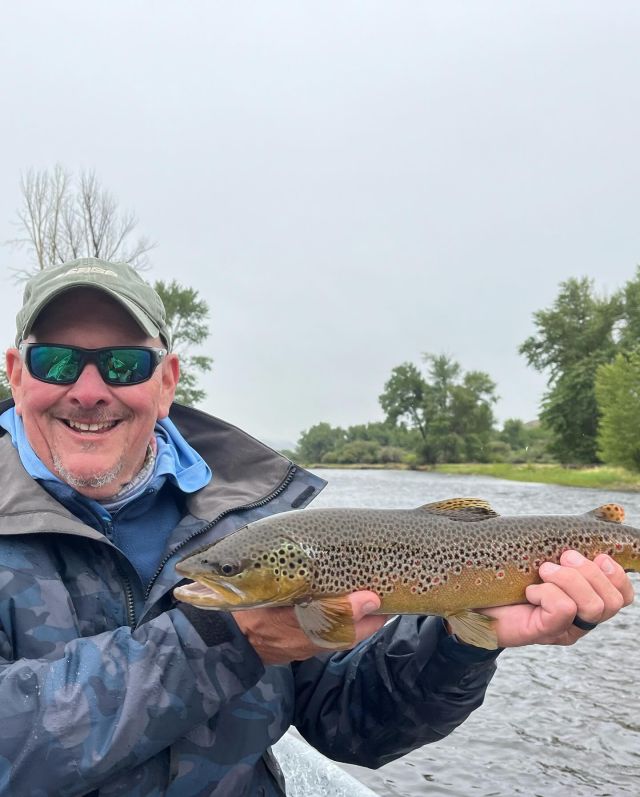
Brian Shumaker is the owner of Susquehanna River Guides, specializing in fly-fishing for smallmouth bass on the Susquehanna River that runs through Harrisburg, Pennsylvania. The Susquehanna River is a fertile limestone river and home to one of the best smallmouth fisheries in the East. This majestic river is rich in food, with rock ledges and wide shallow riffles laden with nymphs, crayfish and other foods. This environment ensures prolific hatches and rapid growth rates and holds the promise of thrilling smallmouth fishing!
Brian’s love of fishing started at an early age, encouraged by his father. After years of exploring the fascinating island-studded river, Brian started Susquehanna River Guides in 1993 as a way to share his love of the river and fly fishing with others. Today, clients from every reach of the U.S. and as far away as Canada travel to Central Pennsylvania to discover the thrill of fly fishing for smallmouth bass.
Off the river, Brian is active with various organizations, including Smallmouth Alliance and Trout Unlimited, and has been a guest speaker for many local and regional organizations. Publications such as Fly Fish America have covered Susquehanna River Guides, as well as regional newspapers and publications.