S8, Ep 56: Topwater Tactics: Captain Brian Shumaker's Pennsylvania Smallmouth Report

 Apple Podcasts
 Spotify
 Overcast
 Castro
 YouTube
 RSS Feed
 Episode Overview
On this Pennsylvania Smallmouth Report from The Articulate Fly fly fishing podcast, host Marvin Cash checks in with Captain Brian Shumaker of Susquehanna River Guides for a peak-summer conditions update on the Susquehanna and Juniata rivers in Central Pennsylvania. Flows are running skinny with a stretch of cool mornings and low humidity, with rain in the forecast to bump levels back up. Shumaker breaks down a topwater program built around a heavy blue damsel bite, the arrival of the white fly hatch on both rivers and cicadas working the banks, along with the disciplined casting angles and dead-drift-then-pop presentation that turn a good popper bite into a great one. He also covers how he adjusts on cooler mornings when bug activity is slow, switching clients to lightly-weighted Clouser minnows and crayfish patterns fished on floating lines and long leaders to stay in the smallmouth's strike zone without hanging up. Shumaker explains why he skips the obvious white fly dry fly in favor of a small floating minnow or white popper during the dusk-into-dark spinner fall and why a proper strip set, not a trout set, is the difference between a hookup and a miss. The conversation closes with a seasonal look ahead: bookings running into early October before the bite transitions from topwater to streamers as water temperatures cool through the fall.
Key Takeaways
- How to position the boat and cast at a consistent 45-degree angle downstream so both anglers maintain a natural drift without creating drag or crossing lines
- Why the pause after a popper's initial splat, not the retrieve, is what triggers a smallmouth strike
- When to switch from topwater to lightly-weighted Clouser minnows and crayfish patterns on cooler, low-activity topwater mornings
- Why floating lines and 9-foot leaders outperform intermediate lines for working skinny summer flows without hanging bottom
- How to fish the Susquehanna's white fly hatch with a small floating minnow or white popper instead of a matching dry fly
- Why a strip set rather than a trout set is essential for solid hookups on topwater and streamer eats
Techniques & Gear Covered
Shumaker's summer program centers on blue and black poppers fished with a deliberate splat-pause-pop-pause retrieve, paired with disciplined 45-degree downstream casting angles from both the bow and stern to keep flies drifting at boat speed and avoid drag. For lower-activity topwater mornings, he switches clients to lightly-weighted Clouser minnows tied with small dumbbell or bead chain eyes and crayfish patterns worked with short strips and a pause, fished on floating lines with 9-foot leaders rather than intermediate lines. During the Susquehanna and Juniata white fly hatch, he intentionally avoids a matching dry fly in favor of a small floating minnow or small white popper, reasoning that a fly which stands out from thousands of naturals draws a more confident eat. Across every presentation he emphasizes a strip set over a trout set to avoid pulling the fly away from a committed fish.
Locations & Species
The report centers on the Susquehanna and Juniata rivers in Central Pennsylvania, where smallmouth bass are the primary target during the height of topwater season. Conditions are running low and clear after several days of cooler, low-humidity weather, with rain needed to bump flows back to normal summer levels. The Susquehanna's white fly hatch is in full swing alongside blue damsels and resident cicadas, a combination that defines the region's peak summer surface bite from late morning through the dusk-into-dark spinner fall.
FAQ / Key Questions Answered
Why does the pause matter more than the retrieve when fishing poppers for smallmouth bass?
Shumaker explains that whether an angler is fishing a popper, streamer, crayfish pattern or hellgrammite imitation, smallmouth bass eat during the pause far more often than during active movement. The retrieve gets the fly in front of the fish, but the pause is what triggers the strike.
How should anglers position themselves in a drift boat when casting poppers for smallmouth?
Both the bow and stern anglers should cast at a consistent 45-degree angle downstream rather than straight out or straight downstream. This keeps each fly drifting at the same speed as the boat, prevents drag and avoids the two anglers crossing or tangling lines, with the oar marking the boundary between each angler's casting lane.
What should anglers throw when cooler mornings slow the topwater bite?
On cooler, low-activity mornings, Shumaker switches clients to lightly-weighted Clouser minnows and crayfish patterns fished on floating lines with 9-foot leaders. The lighter weight keeps the fly up off the bottom in the strike zone without hanging up, since he is intentionally avoiding intermediate lines in the current flow conditions.
Why does Brian Shumaker avoid using a standard dry fly during the white fly hatch?
Even though smallmouth will eat a dry fly during a heavy white fly spinner fall, Shumaker prefers a small floating minnow or small white popper because it stands out among the huge volume of naturals on the water. Giving fish something visually different from the thousands of identical insects increases the odds of a confident, aggressive eat.
Why is a trout set the wrong hookset technique for smallmouth bass on the Susquehanna?
Lifting the rod straight up in a traditional trout set pulls the fly away from the fish rather than driving the hook home. Shumaker recommends a strip set instead, which keeps tension on the line and results in a much more reliable hookup on topwater and streamer eats alike.
Related Content
S8, Ep 52: Hot Days and Night Bites: Brian Shumaker's Guide to Pennsylvania Smallmouth Fishing
S8, Ep 48: Summer Heat Strategies: Captain Brian Shumaker's Smallmouth Tips
S8, Ep 39: High Water Strategies: Captain Brian Shumaker's Pennsylvania Smallmouth Insights
S8, Ep 34: Frog Patterns and Fishing Strategies: Brian Shumaker's Late Spring Smallmouth Report
View all Pennsylvania Smallmouth Reports with Brian Shumaker
Connect with Our Guest
Follow Brian on Facebook and Instagram.
Follow the Show
Follow The Articulate Fly on Facebook, Instagram, Threads and YouTube.
Follow our Substack newsletter for episode updates, tips and resources.
Support the Show
Shop through our Amazon link to support the podcast.
Join our Patreon community to support the show.
If you are in the industry and need help getting unstuck, learn more about our consulting options.
Subscribe & Advertise
Subscribe to the podcast in your favorite podcast app.
Think our community is a good fit for your brand? Advertise with us.
In this Pennsylvania Smallmouth Report on The Articulate Fly fly fishing podcast, host Marvin Cash checks in with Captain Brian Shumaker of Susquehanna River Guides for a midsummer conditions update on the Susquehanna and Juniata rivers in Central Pennsylvania. With water levels running low ahead of expected rain, Shumaker is deep into prime topwater season, working blue damsel patterns and black poppers around a strong white fly hatch and resident cicada activity. He breaks down proper boat positioning and casting angles for two anglers working poppers downstream, his pause-driven retrieve for poppers, crayfish patterns and lightly weighted Clouser minnows and why he swaps the dry fly for a small floating minnow or white popper once the Susquehanna's white fly spinner fall gets underway at dusk.
EPISODE SUMMARY
Guest: Captain Brian Shumaker - Guide at Susquehanna River Guides (Central Pennsylvania)
In this episode: Captain Brian Shumaker shares a midsummer conditions update and topwater smallmouth tactics for the Susquehanna and Juniata rivers in Central Pennsylvania. Topics include reading current bug activity for surface presentations, boat positioning and casting angles for two-angler topwater floats and adjusting tactics between poppers, streamers and crayfish patterns as conditions shift.
Key fishing techniques covered:
- Pause-driven retrieve for poppers, streamers and crayfish patterns
- 45-degree downstream casting angles for two anglers sharing a drift boat
- Dead-drifting poppers with a deliberate pause between pops
- Fishing lightly weighted Clouser minnows and crayfish patterns on floating lines with 9-foot leaders
- Switching from dry flies to small floating minnows or white poppers during the white fly spinner fall
Location focus: Susquehanna River and Juniata River, Central Pennsylvania
Target species: Smallmouth bass
Equipment discussed: Blue and black poppers, Clouser minnows (tied with light dumbbell or bead-chain eyes), crayfish patterns, floating fly lines, 9-foot leaders
Key questions answered:
- When does the white fly hatch come off on the Susquehanna River?
- How do you fish poppers for smallmouth bass without spooking them?
- What flies work best during a blue damselfly hatch?
Best for: Intermediate anglers interested in topwater smallmouth tactics and seasonal fly selection on Pennsylvania rivers
FULL TRANSCRIPT:
Marvin Cash
Hey, folks, it's Marvin Cash, the host of The Articulate Fly. We're back with another Pennsylvania Smallmouth Report with the man himself, Captain Brian Shumaker.
Brian Shumaker
Brian, how are you? I'm doing well, Marvin. How about yourself?
Marvin Cash
Just trying to stay out of trouble. And we're working fast here, folks, to get Brian wrapped up so that he can. He can watch the Yankees play the White Sox tonight.
Brian Shumaker
There you go. Get my. Got my fingers crossed on that.
Marvin Cash
Yeah, it's.I guess maybe if they're losing, it's lucky for you that they're starting an hour so you'll go to bed and just read about the train wreck tomorrow on your telephone.
Brian Shumaker
Yeah, that's exactly what I do.
Marvin Cash
Yeah.So, you know, we were talking before we started recording and, you know, pretty much everybody that's on the smallmouth world at this point is pretty firmly entrenched in the top water game. And, you know, I know we were talking about damsels before we started, but, you know, why don't you let folks kind of know what you're seeing.But also, too, you've probably got in the next, I don't know, week to 10 days, it looks like kind of unseasonably cool weather with a fair amount of rain in the forecast, right?
Brian Shumaker
Yeah. Hopefully we're going to get this rain because we're starting to get low, starting to get a little skinny, and we can definitely use a slug of rain.But it has been, I want to say about the last five days, it's been nice. We've been waking up to cold mornings and low humidity.We've had a couple mornings there in the upper 50s, and it's nice to start out the day that way. And you're not soaking wet sweated. So, yeah, we could use a bump of rain. It's getting a little skinny.But also we are in the, I guess, the highlights of top water season where it's pretty much right now it's a blue damsel bite. But last week the white flies started coming off on the Susquehanna. So we have that going on.And that is of course, a dusk into dark patch that comes off on Susquehanna and Juniata river, which is the whiteflies. And so we have that going on during the daytime. We've got predominantly blue damsels and you have the resident cicadas as well coming off.And you can hear them talking in the trees, too. So blue poppers, black poppers have been working very well for us.
Marvin Cash
Yeah. And you want to share your philosophy on moving or not moving the bug?
Brian Shumaker
Yeah. Basically, you don't want to play Roland Martin when you're casting these bugs.It means what I mean by that is don't cast it out there and just start ripping on that fly. Basically what you want to do was it poppers is you're going to cast it out there. Once it hits the water, it hits that splat.You're going to wait till those rings disappear and slowly give it a plop and then let the rings disappear and let that fly drift.The key to that too is the person in front of the boat needs to be casting downstream out of the front of the boat at like a 45 degree angle so they don't end up with that fly. Ends up up behind the back end of the boat. So they want to keep. Maintain contact as we're floating down that river.Because the boat is constantly moving and a 45 and just hit your targets and you know, give it a. You're going to dead drift it and give it a little plop and then dead drift it. Give it a little pop and dead drift and it's wash, rinse and repeat.
Marvin Cash
Yeah. And you can ride it for a long way down the river too, if you don't. Don't screw it up.
Brian Shumaker
Yeah, absolutely. And that's, that's what they try to explain to the folks is, you know, you want to try to keep that at a 45 degree angle.And it's the same for the person in the back. They're going to cast downstream at a 45 degree angle.So they're both, you know, and I can, we can put in a long drift down a decent cast and, and work. Work those sections of water.
Marvin Cash
Yeah.The other thing too, and I think a lot of people kind of don't realize this, but when you're in the front, you know that 45 degree angle, I mean it's kind of silly to basically cast perpendicular to the bow of the boat if you're in the front. Cause you're wasting all the advantage of being up there and being stealthy.
Brian Shumaker
Right, exactly, exactly. And the other thing you don't want to do and a lot of people make this mistake is they want to go straight down in front of the boat.I said now because now we're coming down in on top of your fly. That's why you want to be off on a 45 angle. So you know that flies riding along basically the same speed as what the boat is coming down river.And you definitely. I said definitely. Don't throw back past my or. Because now all you do is Create drag and you know you're not going to get a fish to eat like that.
Marvin Cash
Yeah, the oar is the line of demarcation is the big. No, no. Right.
Brian Shumaker
Yeah, that is because I basically got to tell them, I said, okay, so the person in the front you get from the oar when it's straight out the side of the boat downstream and the person in the back, you get to the oar back to you. So don't be going down and cutting each other off. So it, it's funny, sometimes they just don't pay attention.
Marvin Cash
Yeah, we were talking before we started recording that, you know, if folks don't listen at home and at work, they're probably not going to listen in the boat either.
Brian Shumaker
That's. Yeah, sometimes it, it takes a lot of talking to get the point across.
Marvin Cash
Yeah. And we were saying too that you kind of have to alter your plan a little bit.Like the top water is on, but on these cooler mornings the bug activity is not quite the same. How do you like to change your approach?
Brian Shumaker
What we'll do is we'll either throw crayfish pattern or smaller streamers, lightweighted streamers. Like if I, if I want to have them throw a Clouser minnow, I tie them up with real light eyes, like 1/50 eyes. Or I have some with even bead chain.Because we're basically with the water flow that we have, we're not using intermediate lines, we're basically just using floating lines, nine foot leaders. So that way they're not going to be hanging up on the bottom, but it brings it right in the sweet spot.And they can work as their smaller streamers and stuff. And then also the crayfish have been working good, you know, just working those crayfish where you, where you want to keep it up off the bottom.So it looks like a fleeing crayfish, you know, little short strips and a pause. Little short strips and a pause. And that's one point that I like to bring up too.Whether you're fishing poppers or the streamers or the crayfish, nine times out of ten the smallmouth bass is going to eat on the pause for the most part. So you always got to have a pause.Whether you're doing a streamer, a popper or a crayfish or a hellgrammite, it's that pause is when they're going to eat it.
Marvin Cash
Yeah. And don't let go to the line with your line hand either because you won't be able to set the hook.
Brian Shumaker
Well that's another true story. Yeah. And don't come straight up with the rod and trout set on these fish because it doesn't work.You end up pulling that fly away from that, away from the fish and you don't get a good hook set on it.
Marvin Cash
Yeah. And we were talking, I think last time you were saying you actually prefer not to fish a dry fly for the white fly hatch.You actually like to use a minnow, right?
Brian Shumaker
Yeah, there's. Well, there's two, two flies that I liked. For the dry or for the white fly.
Marvin Cash
You.
Brian Shumaker
A lot of folks have never experienced a white fly hatch on the Susquehanna. And it can be epic.Where I'm talking, you're going to have a spinner fall in your boat where you can actually be scooping it out in your hands to throw them out. It's that heavy. So my theory is, always has been, yes, you can throw a dry fly, they will eat the dry fly.But when you have a million of those insects on that water, why do you want to throw something that looks exactly the same? So I will either throw a small floating minnow or a small white popper.And it's very effective because now you're given, you're giving it, you're giving the fish something different and they're going to just come up and smack it.
Marvin Cash
Yeah. And that's good.And you know, not trying to, you know, find a needle in a haystack helps a ton, particularly as we get older and our eyes aren't as good. And you don't have any light.
Brian Shumaker
Right, right.Because like I said, it'll start, it starts at dusk because you first, the first insects that'll come off are going to be the brown drakes and you can fish those. And then right after that, starting to get dusk. You know, I'm going to say now, this time of year you're looking like 8, 20, 8, 30.And that hatch goes in to dark 9, 9, 30. So, yeah, you're going to go from getting dust to dark. Yeah. And you. And basically, if you got a moon that's good, it lights it up.But if you got clouds, you're not going to see a whole lot. So you're going to pretty much have to go by feel.
Marvin Cash
Yeah, got it. Well, folks, we've given you a ton of little tidbits this time around.And you know, Brian, as we kind of, you know, head into the home stretch of summer, I, you know, I imagine you're probably pretty well booked up until things probably start to cool off in like late September. October, right?
Brian Shumaker
Yeah, I got some. I got some dates late September and the first half October. A few dates available yet.
Marvin Cash
Yeah. And it really just kind of depends on what the weather does. Right. If it stays warm, the bug bite is good.If it cools off, that just means the streamer bite turns on, right?
Brian Shumaker
Yep.Then we go to streamers once it starts cooling off and there'll be, you know, once that happens, it'll be streamers right up until the end of October.
Marvin Cash
Yep. Take a little bit of break and go back to the. To the day job. Day job, right.
Brian Shumaker
Yeah. And back. Back to doing electrical work over the wintertime.
Marvin Cash
Yeah. For your farewell tour because it's almost over, right?
Brian Shumaker
Yeah, it'll be my farewell tour for sure.
Marvin Cash
Well, listen, folks, you owe it to yourself to get out there and catch a few tight lines, everybody. Tight lines, Brian.
Brian Shumaker
Tight lines, Marvin.
Guide | Hosted Travel
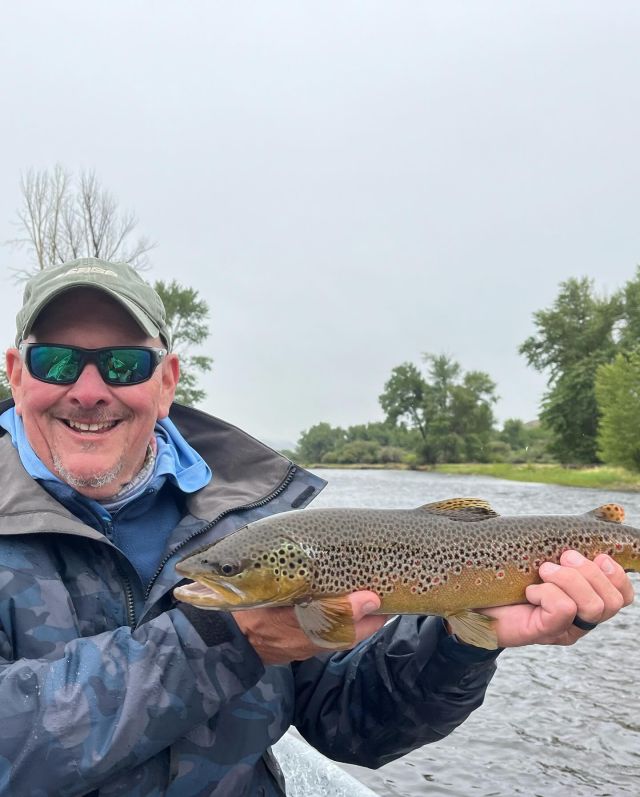
Brian Shumaker is the owner of Susquehanna River Guides, specializing in fly-fishing for smallmouth bass on the Susquehanna River that runs through Harrisburg, Pennsylvania. The Susquehanna River is a fertile limestone river and home to one of the best smallmouth fisheries in the East. This majestic river is rich in food, with rock ledges and wide shallow riffles laden with nymphs, crayfish and other foods. This environment ensures prolific hatches and rapid growth rates and holds the promise of thrilling smallmouth fishing!
Brian’s love of fishing started at an early age, encouraged by his father. After years of exploring the fascinating island-studded river, Brian started Susquehanna River Guides in 1993 as a way to share his love of the river and fly fishing with others. Today, clients from every reach of the U.S. and as far away as Canada travel to Central Pennsylvania to discover the thrill of fly fishing for smallmouth bass.
Off the river, Brian is active with various organizations, including Smallmouth Alliance and Trout Unlimited, and has been a guest speaker for many local and regional organizations. Publications such as Fly Fish America have covered Susquehanna River Guides, as well as regional newspapers and publications.