S8, Ep 82: Chasing Musky in Clear Water: Matt Reilly on Retrieve Speed and Seasonal Shifts

 Apple Podcasts

 Spotify

 Overcast

 Castro

 YouTube

 RSS Feed
Episode Overview
In this Southwest Virginia Fishing Report from The Articulate Fly, guide Matt Reilly explains how early-season musky are behaving in low, very clear water as an abrupt cold front brings Indian summer to an end. Recorded in mid-November, the episode is a practical guide to where river musky concentrate when flows drop, why water clarity should drive your retrieve speed and how to tell when the river has truly shifted into winter.
Matt notes that conditions across Southwest Virginia's rivers are normal for the season, with water temperatures still in the mid-50s and another 10-plus degrees of cooling ahead before things are solidly winter. Low flows push musky to group up in deeper water within good habitat, a version of the wolf packing that smallmouth display in late summer and early fall. He doesn't expect the incoming front to shuffle fish much, with the bigger seasonal move typically arriving later in November.
The heart of the conversation is retrieve speed. Matt does slow down as water cools, but clarity drives his day-to-day adjustments: in gin-clear water he prioritizes speed and experiments with fly profiles, because it is nearly impossible to move a fly too fast for an interested musky. He also shares his favorite real-time indicator of seasonal change, the visibility of smallmouth, sunfish, minnows and carp on shallow rock piles and near the bank.
The episode closes with booking guidance for the musky season, including more availability in January and February, plus spring options for musky, smallmouth and striper. Learn more at mattreillyflyfishing.com.
Key Takeaways
- How to find early-season musky in low, clear water by focusing on deeper water within good habitat, where fish tend to group up when flows drop.
- Why water clarity, more than water temperature, should drive day-to-day changes in your musky retrieve speed.
- Why a fast retrieve is the right default in gin-clear water, since it is nearly impossible to strip a fly too fast for an interested musky to chase.
- How to read smallmouth, sunfish, minnows and carp on shallow rock piles and near the bank as a sign the river has not yet shifted into winter mode.
- When to expect the major seasonal shift in musky location, with mid-50s water temperatures still needing to fall another 10-plus degrees before conditions are solidly winter.
- When to book a Southwest Virginia musky trip, given that the early season is largely booked while January and February offer more availability.
Techniques & Gear Covered
Matt Reilly's core tactic in this report is a fast streamer retrieve for musky in low, clear water, paired with day-to-day experimentation with fly profiles and types to dial in what the fish want. He explains that while he does slow down as water gets colder, clarity drives his quickest adjustments: in dingy water, even in May, he fishes a slower, more trackable retrieve, while in gin-clear late-fall and early-winter conditions he prioritizes speed over everything else. The report also covers reading low-water habitat, where musky group up in deeper water within good holding structure, and using the visibility of non-target fish as a real-time gauge of how far the season has progressed. For more cold-water predator coverage, browse the Musky Episodes archive.
Locations & Species
This report covers musky fishing on the rivers of Southwest Virginia, where mid-November conditions feature low, very clear water that Matt describes as normal for the season. Water temperatures sat in the mid-50s at recording, with an incoming cold front forecast to bring lows in the 20s, though Matt doesn't expect the front alone to move fish much; the bigger seasonal shift typically arrives later in November. Smallmouth, sunfish, minnows and carp serve as indicator species for reading conditions.
FAQ / Key Questions Answered
How do you find musky in low, clear water in late fall?
When flows drop, musky tend to group up in deeper water within good habitat, much like the wolf packing smallmouth show in late summer and early fall. Matt Reilly focuses on those deeper pockets and narrows his effort more precisely as the season moves toward winter. Fish still move around a lot day to day, so stay observant.
Why does water clarity matter more than temperature for musky retrieve speed?
Matt does slow down as water cools, but his quickest day-to-day retrieve adjustments are driven by clarity. In dingy water, even in May, he fishes a slower, more trackable retrieve; in gin-clear water in late November or early December, he prioritizes speed. He considers it borderline impossible to move a fly too fast for a musky that is genuinely interested.
How can you tell when a Southwest Virginia river has shifted into winter mode?
Watch the non-target fish. If smallmouth, sunfish, minnows and carp are easy to see on shallow rock piles and close to the bank, conditions have not yet moved solidly into winter. Once those fish largely disappear from view, it is a strong sign the river has changed.
When is the best time to book a musky trip with Matt Reilly?
The early part of Matt's musky season is already thin on availability, while January and February offer more open dates. He recommends reaching out as far ahead as possible, at any time of year, to talk through your interests and plan the best trip. Spring options include musky, smallmouth and striper, and contact details are at mattreillyflyfishing.com.
Related Content
S8, Ep 77 - From Smallmouth to Musky: Matt Reilly's Guide to Southwest Virginia's Fall Fishing
S7, Ep 99 - Winter's Approach: Matt Reilly's Tips for Catching Musky in Low Water
S8, Ep 2 - January Fishing Forecast: Weather Patterns and Musky Tips with Matt Reilly
S6, Ep 146 - Musky Mysteries: Winter Tactics and Fly Tying Tips with Matt Reilly
View all Southwest Virginia Fishing Reports with Matt Reilly
Connect with Our Guest
Follow the Show
Follow The Articulate Fly on Facebook, Instagram, Threads and YouTube.
Follow our Substack newsletter for episode updates, tips and resources.
Support the Show
Shop through our Amazon link to support the podcast.
Join our Patreon community to support the show.
If you are in the industry and need help getting unstuck, learn more about our consulting options.
Subscribe & Advertise
Subscribe to the podcast in your favorite podcast app.
Think our community is a good fit for your brand? Advertise with us.
In this Southwest Virginia Fishing Report on The Articulate Fly, host Marvin Cash checks in with guide Matt Reilly of Matt Reilly Fly Fishing as a mid-November cold front ends a stretch of warm fall weather in the high country. Reilly describes low, clear water with temperatures still in the mid-50s and explains how those conditions push musky into deeper water within good habitat, much like the early wolf packing he sees in smallmouth late in the season. He makes the case that water clarity, more than water temperature, drives his day-to-day retrieve speed for musky on the fly, and that a fast-moving streamer is nearly impossible for an interested fish to refuse in gin-clear water. He also shares how reading smallmouth, sunfish, minnows and carp in shallow water signals when a river has truly shifted into winter, and closes with an update on winter musky availability and spring trips for musky, smallmouth and striper.
EPISODE SUMMARY
Guest: Regional Fishing Report - Southwest Virginia / Matt Reilly - Fly Fishing Guide at Matt Reilly Fly Fishing (Southwest Virginia)
In this episode: Southwest Virginia guide Matt Reilly shares late fall musky fly fishing strategies for low, clear river conditions as the first hard cold front of the season arrives. Topics include how low water concentrates musky in deeper holding water, why water clarity rather than temperature dictates streamer retrieve speed and how the behavior of non-target fish signals the transition into winter.
Key fishing techniques covered: • Fast streamer retrieves for musky in low, clear water • Slower, more trackable retrieves for musky in dingy or stained water • Targeting deeper holes and winter holding water when low flows concentrate fish • Reading smallmouth, sunfish, minnow and carp activity in shallow water to gauge the seasonal transition • Rotating fly profiles and types day to day to find what musky want
Location focus: Southwest Virginia rivers and the Virginia high country
Target species: Musky (muskellunge), smallmouth bass and striped bass (striper)
Equipment discussed: Musky streamers in varied fly profiles
Key questions answered: • How fast should you strip a streamer for musky in clear water? • Does water temperature or water clarity matter more for musky retrieve speed? • How do low water levels in fall affect where musky hold in rivers? • How do you know when a river has transitioned to winter musky conditions?
Best for: Intermediate to advanced anglers interested in musky fly fishing on Southwest Virginia rivers, fall-to-winter seasonal transitions and planning winter musky or spring smallmouth and striper trips
Full Transcript:
Marvin Cash
Hey folks, it's Marvin Cash, the host of The Articulate Fly.We're back with another Southwest Virginia Fishing Report with the man himself, Matt Reilly.Matt, how are you.
Matt Reilly
Doing?Pretty well, man.How are you?
Marvin Cash
Just trying to stay out of trouble.And I think, you know, Indian summer is coming to an abrupt end here in a few days in southwest Virginia.
Matt Reilly
Oh yeah, we're.We're gonna get smoked.I think this weekend with.Well, they're calling for some pretty heavy.Pretty heavy.It's not quite pretty heavy, but it's.It's going to be semi inconvenient when.The end of this week and into the weekend and then all next week.We're looking at lows in the 20s.So it's.Yeah, it's.It's coming to an end pretty quick.
Marvin Cash
Yeah, a little snow too, right?
Matt Reilly
That's what they say.It's kind of disappeared from the, from the forecast, any precipitation, but you know, the high country is always a roll of the dice.We'll, we'll see.
Marvin Cash
Yeah.So I think the last time we spoke, you know, was a good time to get out.Early season muskie, they were kind of all over the place.You know, we were talking before we started recording.It's going to cool off and be cloudy.So what do you think you're going to find when you get back out on the water?
Matt Reilly
Well, I mean it's, it's all been pretty.It water's pretty low, very clear, very normal for this time of year.But you know, we've.We've found fish.I think when it, when it is low, particularly in pieces of water that, that have is.I don't.Sort of a weird way to put it, but like shallow water that would otherwise, you know, if it was at a normal or slightly higher water level, would be like decent fish holding water and deep holes, like good winter spots and everything.You know, we'd focus our efforts a lot more precisely later in the year as opposed to pieces of water that just have a lot of consistent depth.I think when things get real low, you do tend to see a little bit of fish, you know, grouping up a little bit.I think we talked about this towards the end of Smallmouth Season too, where, you know, the sort of typical early fall, late summer wolf packing sometimes feels like it starts a little early when you have really low water because the fish just sort of naturally migrate to areas with, you know, deeper water within good habitat.So I think you're seeing a little bit of that right now on the musky front.But I don't, I don't expect those fish to shuffle around too much with this cold front.It'll, you know, usually it, usually we see a big shift kind of later in the month in November.Water temps are still in like the mid mid 50s right now.So you know, we've got another, another 10 plus degrees and downward momentum until it's like solidly winter and on the river.But you know, day to day, this fish move around a lot.I, I tell people while we're on the water and I think I've mentioned it a ton on here too.You know, best thing you can do is just pay attention to the, to the non musky fish and, and where you're seeing them.You know, if, if you're seeing smallmouth and sunfish and minnows and carp and things like that in, in very accessible locations, like shallow ish water rock piles, like if you're able to see them pretty well closer to the bank, et cetera.I mean, even, even though it is really clear, I think things really haven't like solidly moved into winter yet, you know, there will be a point at which you're just not really seeing a lot of other fish anymore and, and that's, that's a good indication that, that things have changed.
Marvin Cash
Got it.Yeah.And that probably means we're going to have to have temperatures in the 30s for probably a good week to 10 days at least.Right?
Matt Reilly
Yeah, it's like I said, you know, I don't know how, how quickly things are going to drop off next week, but you know, several of those days are like, you know, low at 27 and high of 43.You know, so it's, it's possible we could see a, a big drop.But right, right now, things are very, very falls right now.
Marvin Cash
And so when you're doing kind of that low clear water game, are you fishing kind of smaller streamers with speed?
Matt Reilly
A lot of times.I mean, I, I definitely fish faster now.You know, somebody was asking me this the other day, you know, do you tend to slow down as, you know, in, as the water gets colder as opposed to warmer?And the answer, the answer is yes.But honestly, day to day, if I'm gonna quickly change my retrieve speed, it has a lot more to do with clarity than, than anything.I mean, even, even in, in May, you know, if you had pretty dingy water, I'm gonna probably fish a fairly slow, you know, not slow slow, but like slower, kind of more trackable retrieve than like if it was, you know, the end of November.Early December, and it's gin clear out there.It's really hard to move a fly so fast that a muskie that is interested in it is.Is not going to chase after it.I would say borderline impossible.And, and so, yes, I.In the clear water, I do sort of prioritize speed over anything and, you know, just.Just kind of experimenting with different, different fly profiles and types and stuff like that day to day, just to see what.What they want.
Marvin Cash
Got it.And so, you know, we're gonna, as you've been warning people, and we were talking before we started recording that, you know, the front end of your muskie season's pretty well booked up, but you want to let folks kind of know kind of what things look deeper into the season.And then, you know, you're going to be doing striper stuff.And, you know, I believe that you're going to have an Airbnb in Louisiana too.You want to let folks know about all that stuff.
Matt Reilly
Yeah, I, I was actually thinking about cicadas a little bit more the other day.Well, I'll hopefully have a better update for you next time we talk.But the not.Not that, not that I'm gonna tell anybody, but maybe a yay or nay.But the yeah.So muskie season is.Is already fairly thin, especially, you know, the earlier part of the season.January, February is a little bit more opportunity.And I've been.I've been booking a bunch of days here lately, too, because we're, you know, getting into that mindset now that things are starting to get a little cooler and leaves are dropping.But yeah, you know, like, say it's always reach out.If you have any interest in anything, we'll talk about it.I like to have a conversation with folks about what their interests are and kind of the best way to plan the best trip as far ahead of schedule as possible.So always feel free to reach out no matter what time of year it is.
Marvin Cash
Yeah, we got muskie, smallmouth, and striper in the spring, too, right?
Matt Reilly
Yep.Everything, man.The.The.There's a lot to do.Winter, winter, spring.It's.It's easily, easily my favorite time of the year.If it wasn't for bug fishing in the summertime, I'd.I'd.I could do without most of those months, honestly.
Marvin Cash
Fair enough.Well, you let folks know website and all that kind of good stuff.
Matt Reilly
Yeah, websites, mattreillyfishing.com and all my contact info is on there.So feel free to reach out however you feel best.
Marvin Cash
Well, there you go, folks, as I always say, you owe it to yourself to get out there and catch a few and, you know, book a trip with Matt.Tight lines, everybody.Tight lines, Matt.
Matt Reilly
Hey, thanks, man.
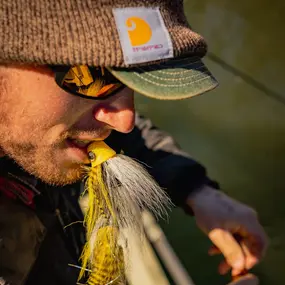
Guide | Fly Tier | Outdoor Writer
Matt grew up stomping around the warm water creeks and rivers of his native central Virginia, just a stone's throw from the James River. He's been blessed with a great many mentors, including his father, who introduced him to fishing before the age of two.
In his teenage years, Matt took his first professional venture into the outdoor industry as a freelance writer and photographer, and soon secured a weekly outdoor column in The Daily Progress' Rural Virginian.
After heading south for college and falling in love with the fisheries of southwest Virginia, Matt established his guide service in 2018. Today, he is a father, husband, USCG-licensed captain, and a leading fishing guide specializing in smallmouth bass, musky, and other predatory game fish. He speaks regularly on a range of topics. His writing has appeared in several national and regional publications like Eastern Fly Fishing, American Angler, Fly Tyer, Southern Trout, Hatch Magazine, and Virginia Wildlife. He is also an ambassador for Reilly Rod Crafters, a producer of premium fly rods based in Virginia.